21 Dorm Apartment Decor Ideas for a First Apartment That Feels Grown-Up
Moving from a dorm room into a first apartment is a bigger change than it looks on a moving list. The room is yours now, the lease is in your name, and the bed, walls, and storage all need to work for daily life rather than just for a term. These dorm apartment decor ideas follow the move in order, from sorting what you already own to finishing the room so it can be handed back cleanly one day.
You do not need to do all 21 at once, and you should not try to buy everything in a single weekend. Start with the edit and the bed, then add light, storage, and one calm palette, and the room will already feel more grown-up. The ideas below are written for small rooms, shared rooms, and small budgets, with renter-friendly methods throughout.
The Dorm-to-Apartment Edit
1. Sort Every Dorm Item Into Keep, Upgrade, or Let Go
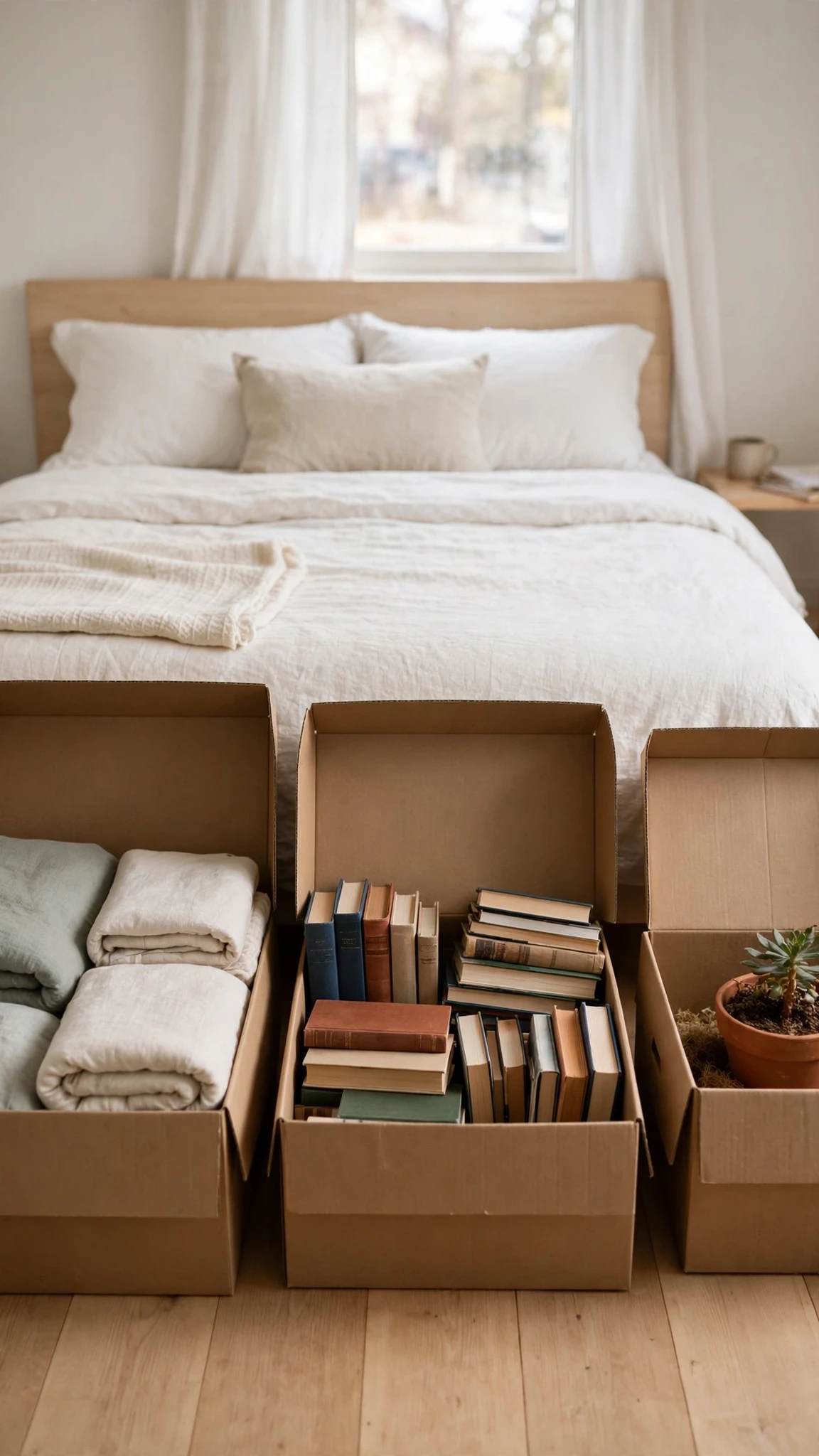
Before you buy a single new thing, sort everything from the dorm into three groups: keep, upgrade later, and let go. Keep only what is in good condition, fits the new room, and suits a calmer palette, because a first apartment bedroom that starts with every dorm leftover will look like a dorm room with a new address. Sorting by category, bed, desk, storage, and decoration, makes the job faster, and a simple rule helps: anything stained, broken, or unused for a full term goes, while personal pieces with real meaning stay and get presented in a more finished way later.
- Styling tip: Sort on the floor in daylight, and put each item straight into a labelled box so nothing drifts back into the keep pile by accident.
- What to avoid: Keeping broken furniture or stained bedding out of guilt, since those pieces will fight every new purchase you make.
- Budget-friendly option: The edit itself costs nothing, and it often reveals that you need far fewer new things than you feared.
2. Choose One Calm Colour Palette for the Whole Bedroom

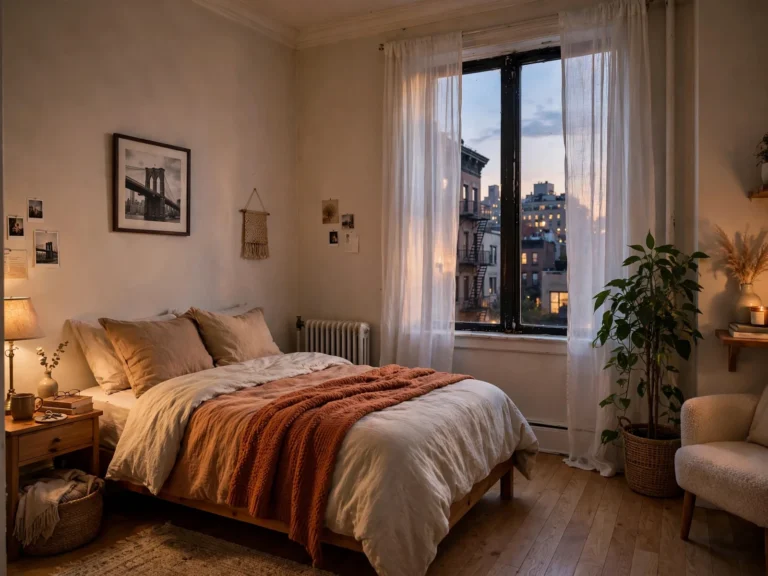
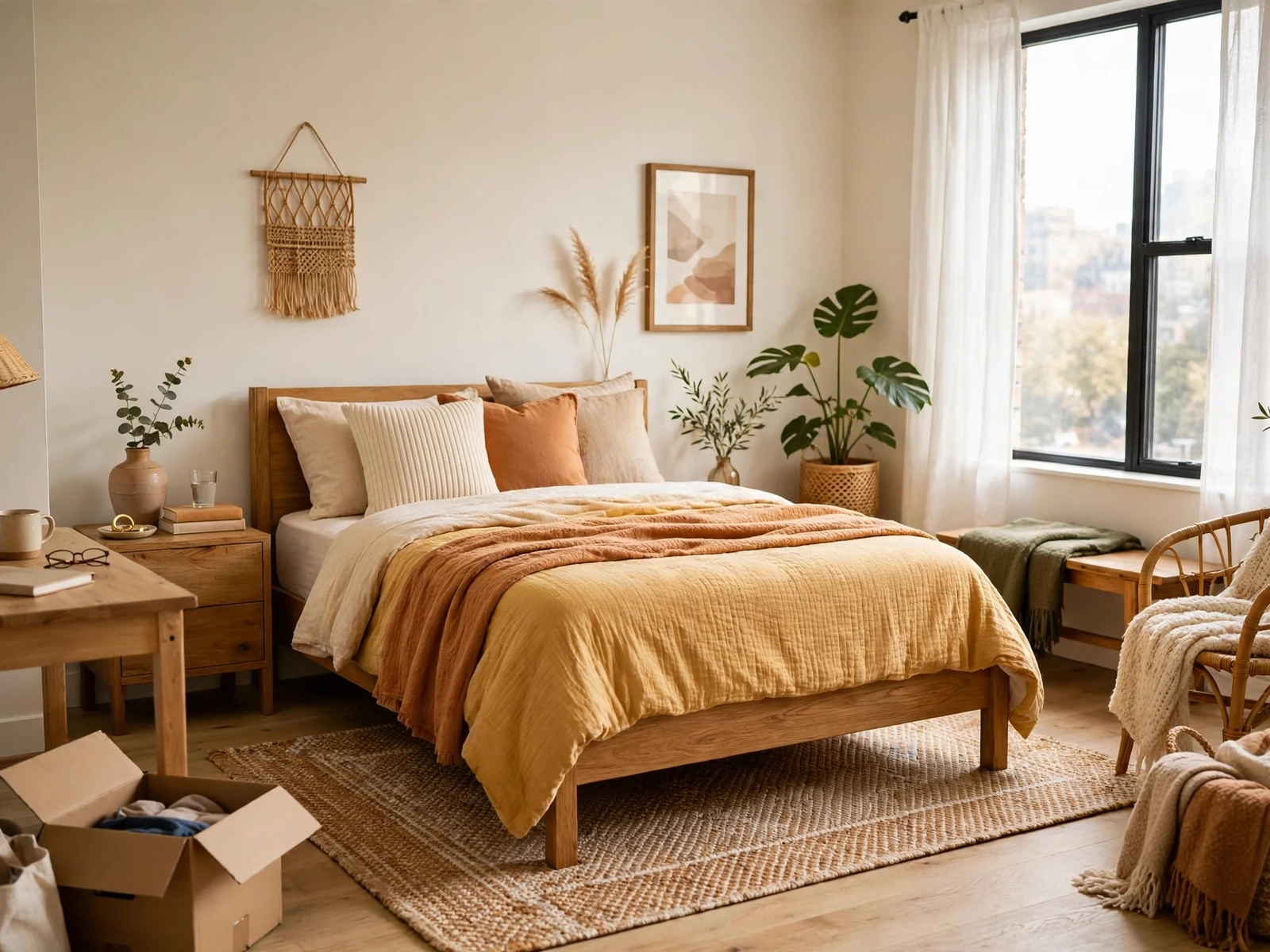
Pick one calm palette, such as warm white, oatmeal, and one warm accent, and carry it through bedding, curtains, rug, and art. A shared palette is the fastest way to make mixed dorm leftovers and new pieces look like one room, because the eye reads the colours as a plan rather than a collection of accidents. Choose the accent from something you already own and like, such as a throw or a print, and test it against the room’s wall colour and daylight before buying larger pieces.
- Color combination: Warm white walls and bedding, oatmeal throws and curtains, and a rust or warm gold accent in one throw and one cushion.
- Styling tip: Keep the other colours quiet once the accent is chosen, so the room stays calm instead of turning into a colour chart.
- What to avoid: Adding a new bright colour with every purchase, which pulls a small room in too many directions at once.
3. Measure the Room and Plan the Layout Before Shopping

Measure the bedroom, the door swings, the window positions, and the closet depth, then sketch a simple layout before you spend anything. A bed or dresser that cannot fit through a door, or that blocks a closet, is the most common first-apartment mistake, and it is also one of the most annoying to fix once the delivery team has left. Plan the bed wall first, then the dresser wall, then the desk, so each piece has a reason for its place, and check walking gaps beside the bed and space for opening drawers.
- Styling tip: Mark the furniture outlines on the floor with painter’s tape, and live with the tape lines for an evening before you order.
- What to avoid: Buying a dresser or desk because it was on sale, without checking whether its drawers can actually open in your room.
4. Replace Dorm Crates With a Real Dresser

Swap plastic crates and open piles for a real dresser, even a small or thrifted one, so clothes have drawers and the room gains a finished piece of furniture. A dresser changes how a bedroom feels every morning, because getting dressed stops being a search through boxes and starts being a simple choice from a drawer. Measure the drawer depth and the wall space first, keep daily clothes in the top drawers and off-season clothes lower down or under the bed, and leave room on top for a mirror or a small lamp.
A Real Bed and Grown-Up Bedding
5. Upgrade From a Twin XL to a Proper Bed and Frame
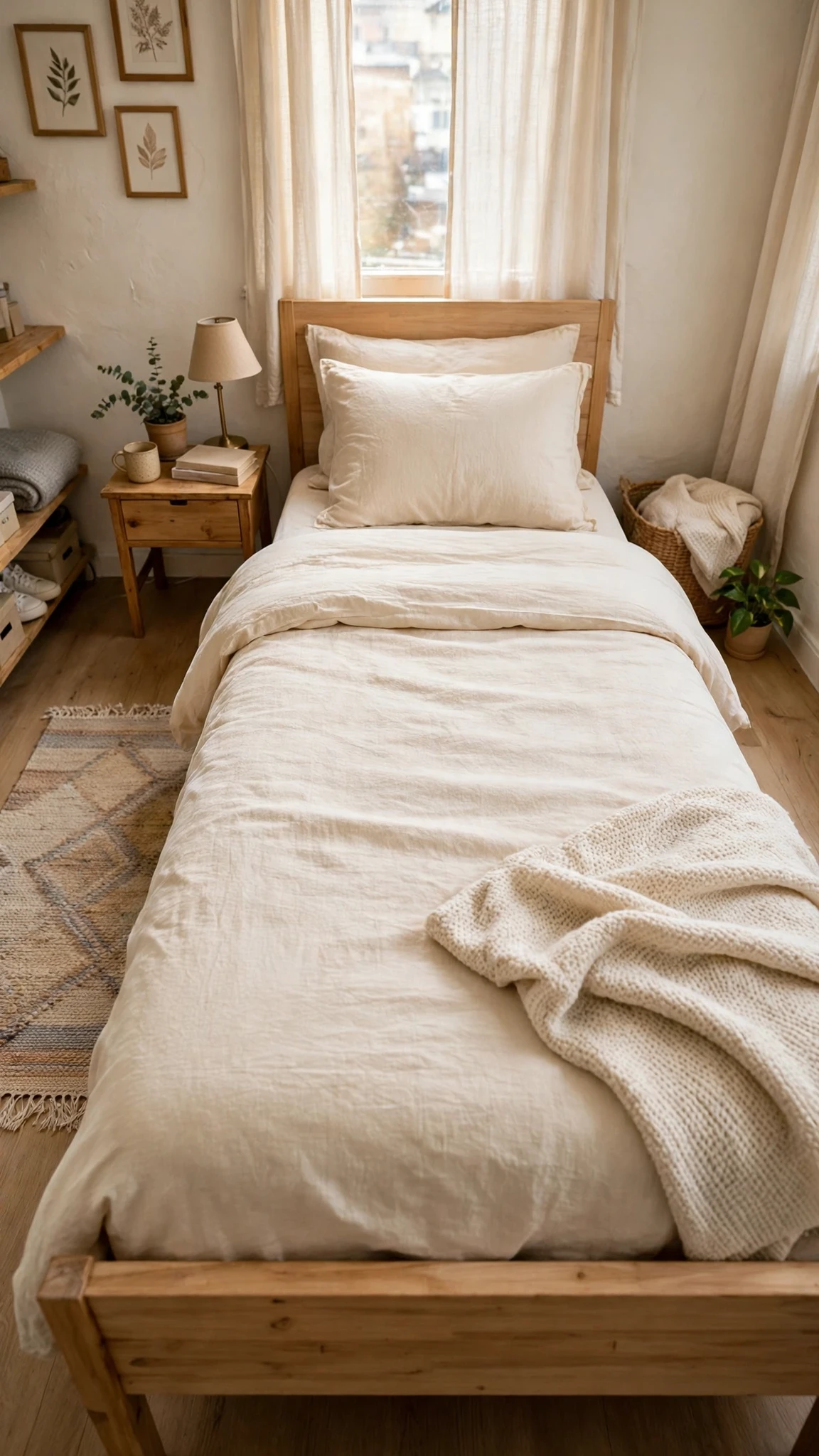
Move from a dorm twin XL to a proper bed and frame that fits the new room, such as a full or a low queen, with a frame that looks finished from every side. The bed is the largest item in the room, so this one upgrade moves the bedroom further from dorm life than any wall decoration can. Check the measurements from the layout plan before choosing a size, keep enough walking space on at least one side, and choose a low frame if the room is small, since a lower bed leaves more visible wall and makes the ceiling feel higher.
- Styling tip: A simple wood or upholstered frame in a quiet tone suits most palettes and will not fight the bedding you already own.
- Budget-friendly option: A low platform frame costs less than a tall panel bed, and it pairs well with under-bed storage boxes.
- What to avoid: Choosing the biggest bed that fits against the wall, with no gap left for getting in and out comfortably.
6. Build Adult Bedding in Layers, Not in Posters
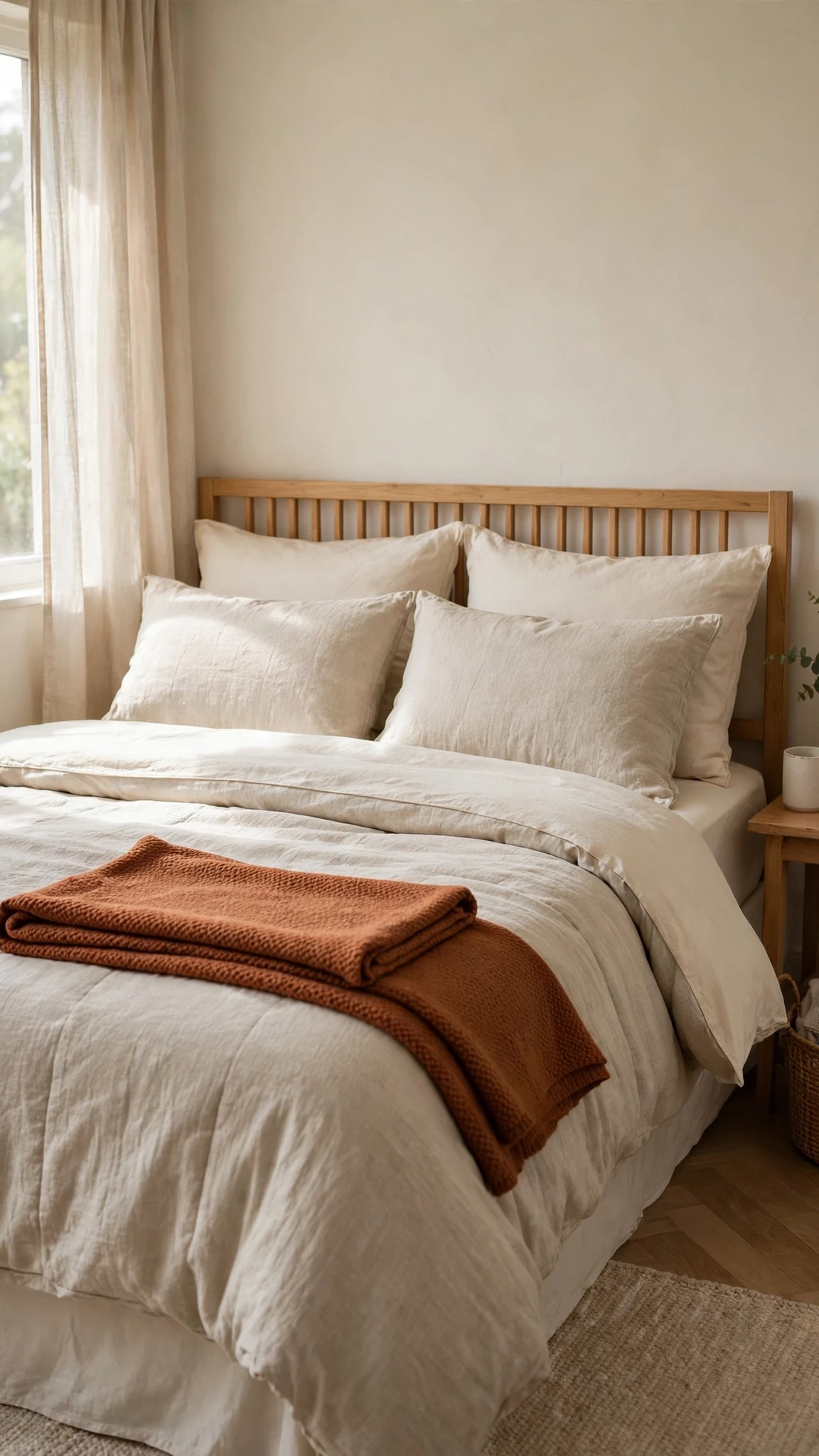
Build the bed in layers: a mattress protector, fitted and flat sheets, a duvet or comforter, and one throw, all inside the palette you chose. Good bedding does more for a grown-up look than wall decoration, because the bed fills the view from the doorway, and a layered bed reads as intentional even when the rest of the room is still coming together. Choose washable cotton or linen-look fabrics that survive regular washing, fold the throw across the foot of the bed during the day, and keep cushions to one or two textured pieces with a basket or chair seat for them at night.
- Color combination: Cream sheets, an oatmeal duvet, and a rust or warm gold throw, with cushions in the same family.
- Styling tip: A mattress protector is not glamorous, but it protects the one piece of furniture you will use every single night.
7. Add a Headboard That Makes the Bed Look Finished
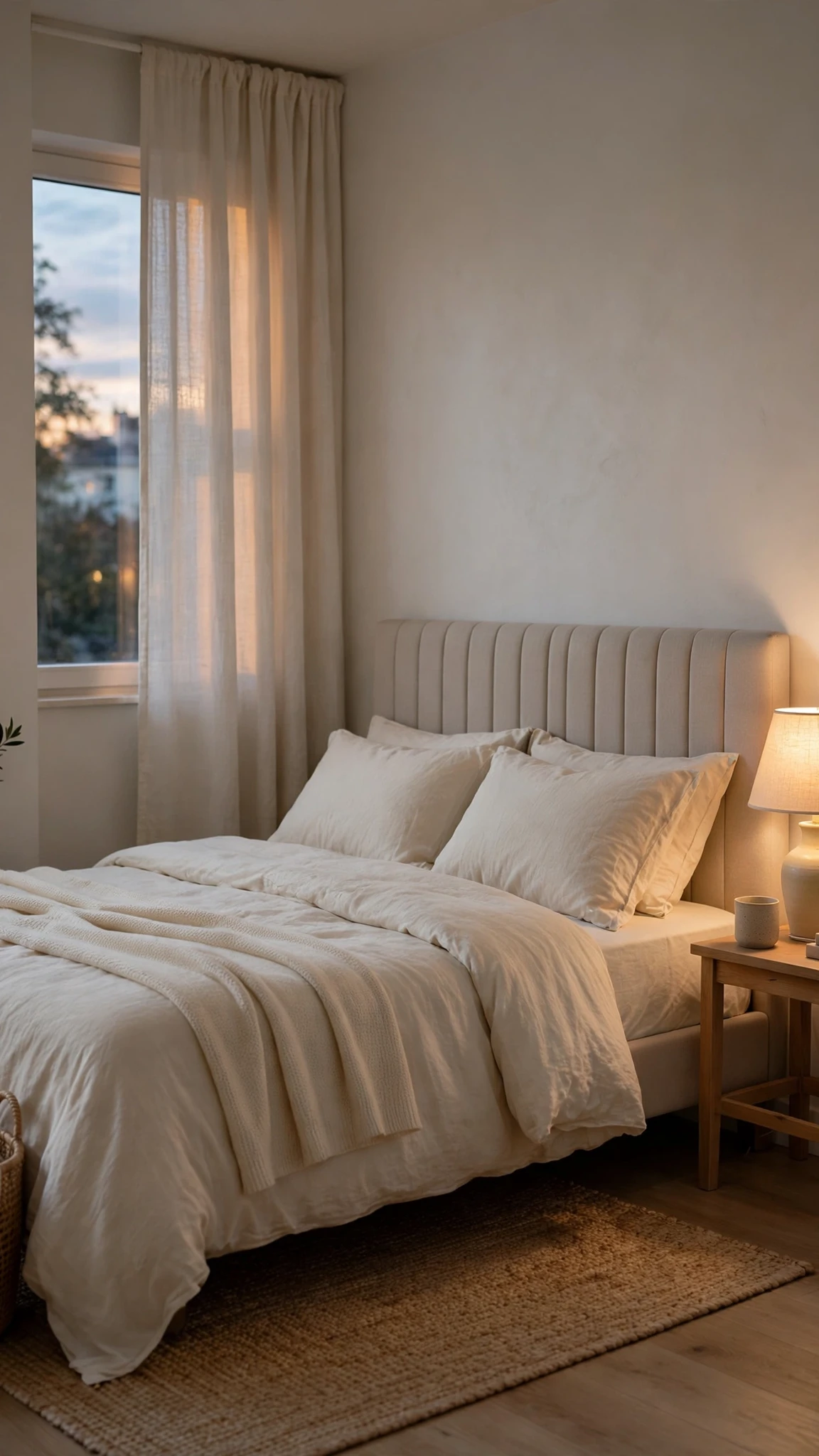
Add a slim headboard, upholstered or wooden, so the bed reads as a finished piece rather than a mattress pushed against a wall. A headboard also gives you a comfortable backrest for reading, which a dorm bed rarely offered, and it frames the pillows so the whole bed looks considered. Keep the headboard slim in a small room, match it to the palette rather than introducing a new colour, and consider a freestanding or wall-mounted headboard if drilling is limited, subject to what the lease allows.
8. Set Up a Bedside That Works for Charging and Reading
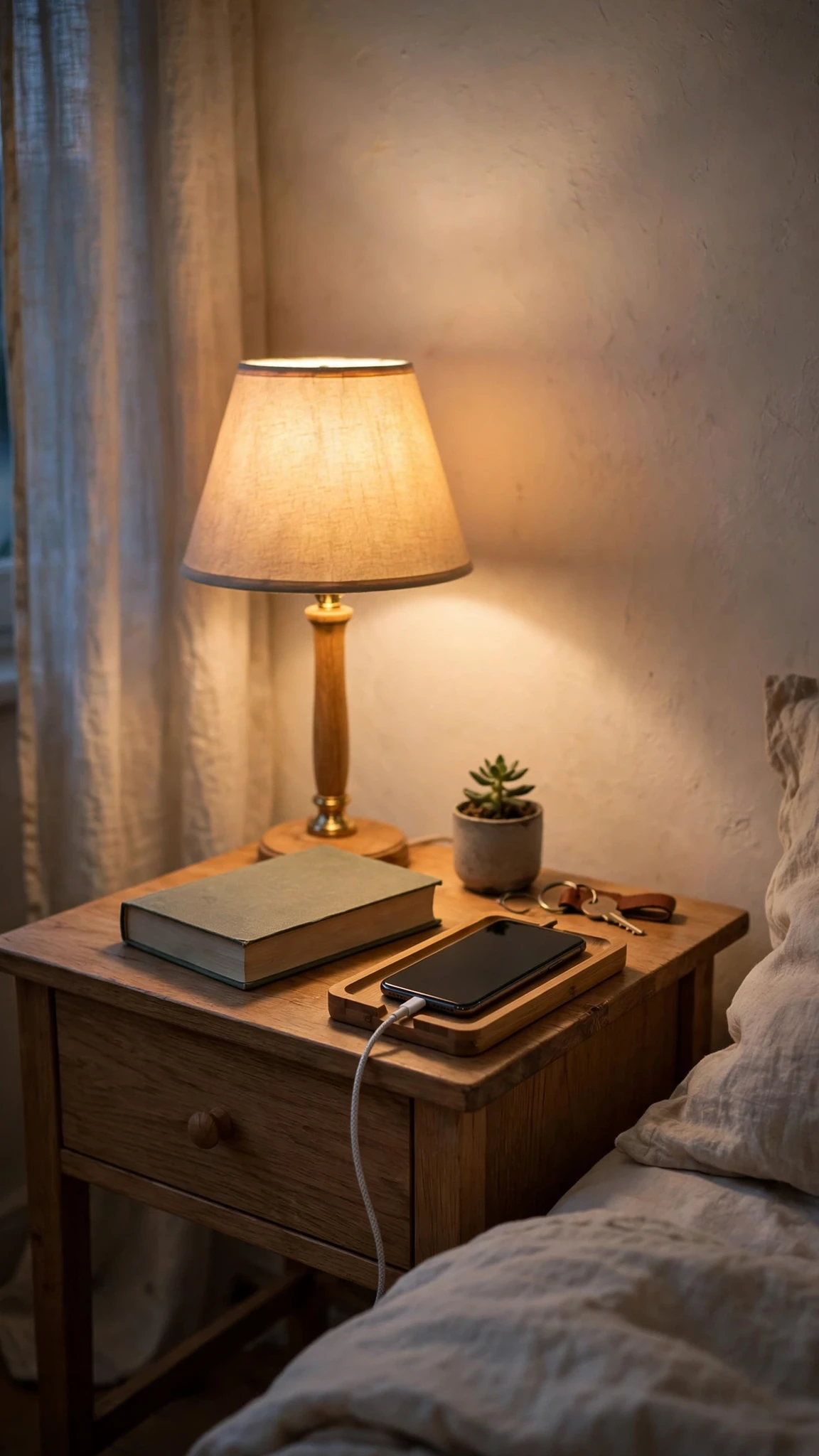
Give each side of the bed, or the one side a small room allows, a proper bedside: a small nightstand or shelf, a lamp, and a tidy charging spot. A bedside that works at night makes the whole room feel considered, and it stops phones and books from living on the floor beside the bed. Keep only nightly essentials on the surface, a lamp, a book, a glass, and a charging cable in a small tray, and use a clip-on shelf or floating shelf if the gap beside the bed is too tight for a nightstand.
Walls, Light, and Colour Without Damage
9. Use Removable Wallpaper or a Framed Gallery on One Wall
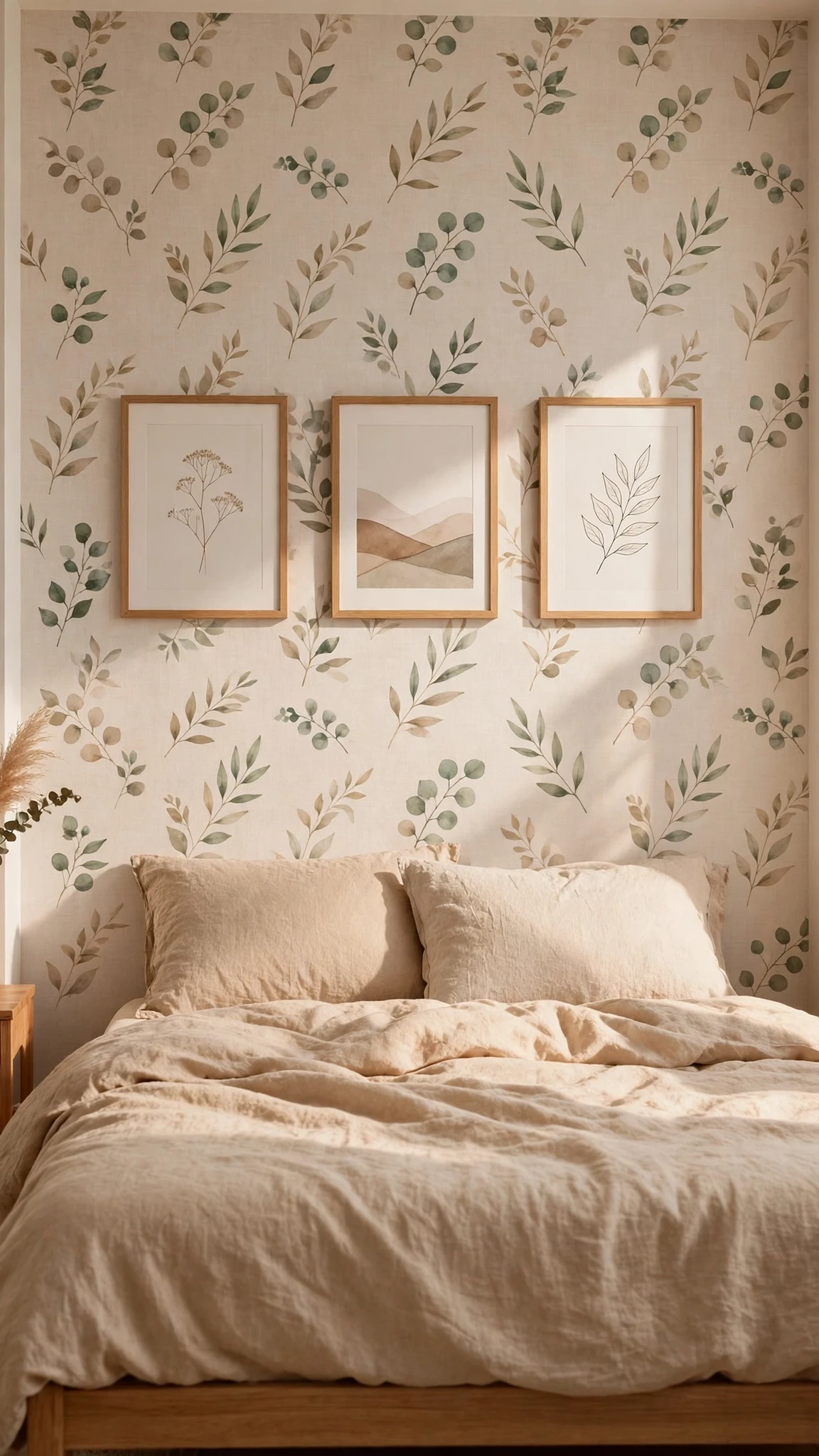
Give one wall a finished look with removable wallpaper behind the bed, or with a small framed gallery hung using adhesive strips. One treated wall is enough in a small bedroom, and both methods can come down without paint damage when the lease ends, which is the whole point of renter-friendly decorating. Choose a calm print or a small set of frames in one finish, leave the other walls plain, check strip weight ratings for each frame, and follow the removal steps for the wallpaper or strips when moving day comes.
- Styling tip: Try the wallpaper or gallery on the bed wall first, and live with it for a few evenings before deciding whether the room needs anything else.
- What to avoid: Papering all four walls in a busy print, or hanging a heavy frame on a strip rated for a light one.
- Budget-friendly option: A small gallery of framed photos and prints costs far less than a full wallpapered room and is easier to remove.
10. Replace Bare Dorm Blinds With Proper Curtains
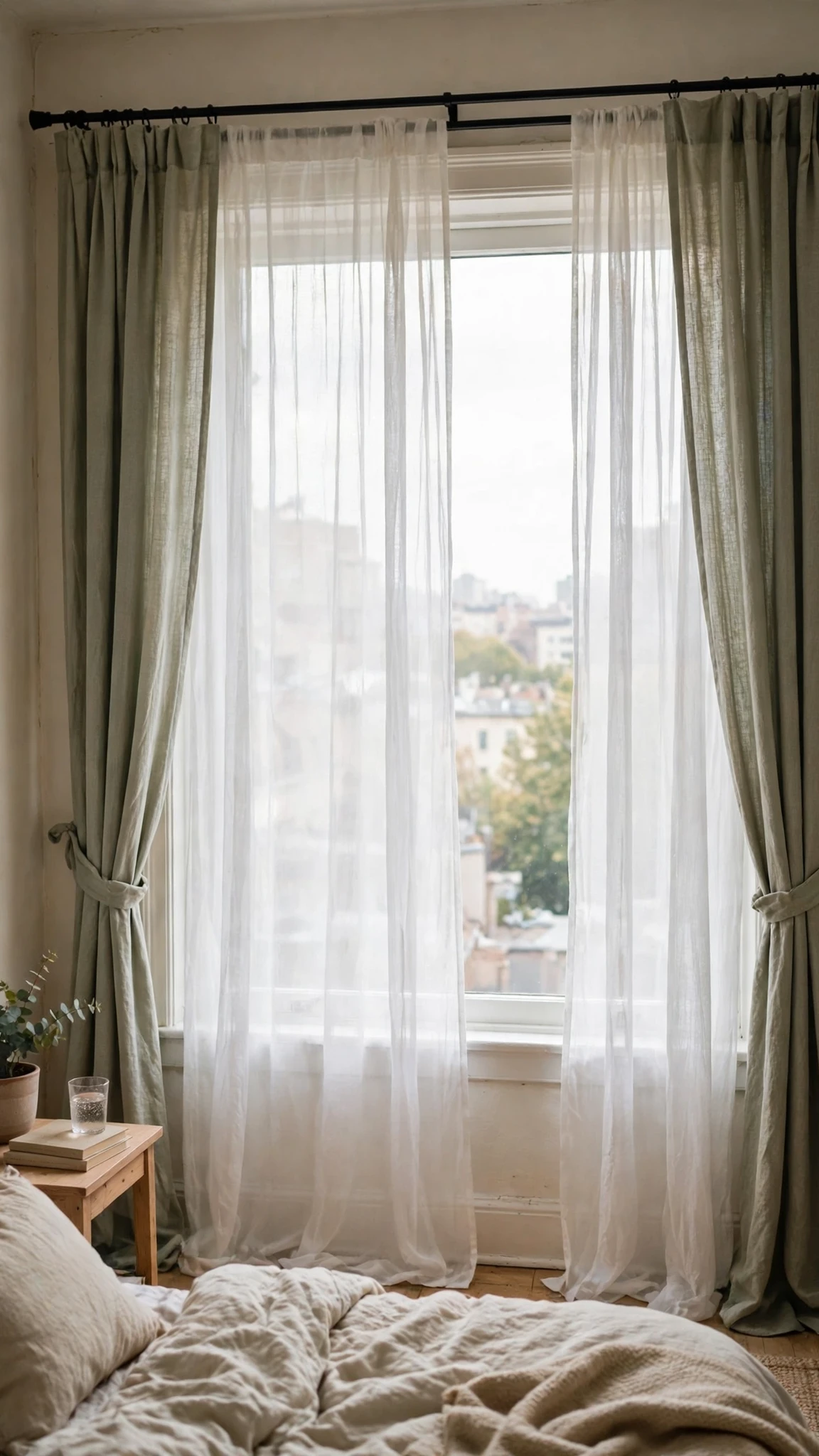
Hang curtains high and wide over the window, with a sheer layer for daylight and a heavier layer for privacy and sleep. Curtains soften a bare rental window, make the window look larger, and mark the room as a home rather than a dorm, all without touching the paint or the wall. Use an existing rod where possible, or a tension rod if the lease forbids drilling, and keep the fabric light in colour so a small room stays bright, with a blackout layer added only where a busy street makes sleep difficult.
11. Layer Warm Light Instead of One Overhead Light
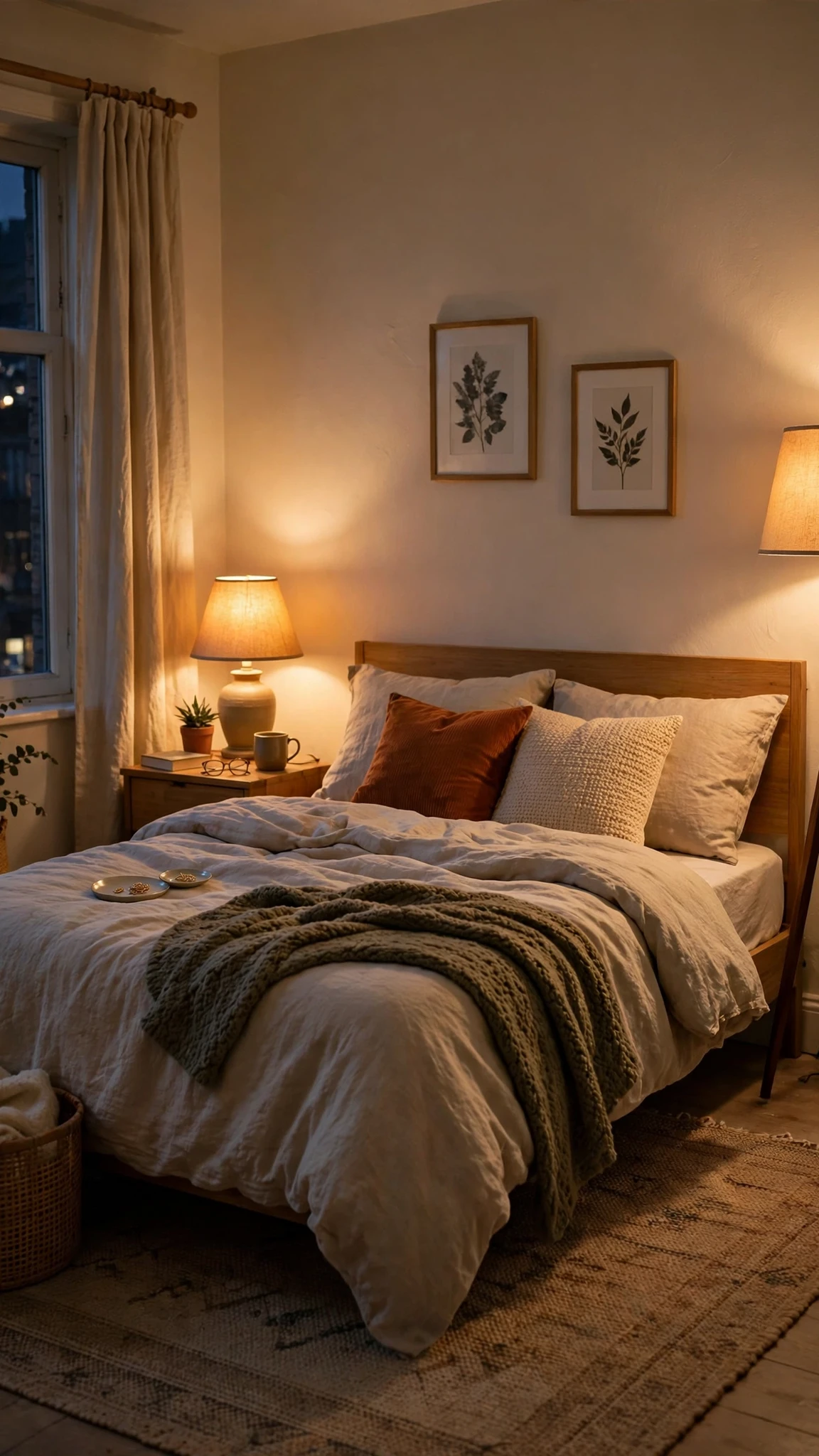
Replace a single harsh ceiling light in the evening with two or three low warm lights, such as a bedside lamp and a small floor lamp. Layered light is the quickest way to make a first apartment bedroom feel cozy at night, and it hides a plain rental ceiling far better than any decoration can. Keep all bulbs in a warm tone, put the brightest light where reading happens, keep the other lights low for atmosphere, and add a small lamp by a chair to create a second cozy corner without buying new furniture.
- Styling tip: Switch the ceiling light off in the evening and let the low lights set the mood, even on ordinary weeknights.
- What to avoid: Mixing cool white bulbs with warm ones, which makes a small room feel uneven and unsettled.
12. Add a Rug That Defines the Bedroom and Softens the Floor

Lay a rug beside or under the bed so the bedroom has a defined floor area, bare feet meet something soft in the morning, and hard rental floors feel warmer. In a studio, the rug also marks where the bedroom zone begins, which matters when one room has to do the work of two. Choose a rug large enough to step onto from the bed, in a flat weave or low pile that is easy to clean in a first apartment, and keep its colour inside the palette you chose, so it ties the bed, curtains, and art together.
Storage, Study, and Daily Life
13. Build a Closet System With Slim Hangers and a Double Rod
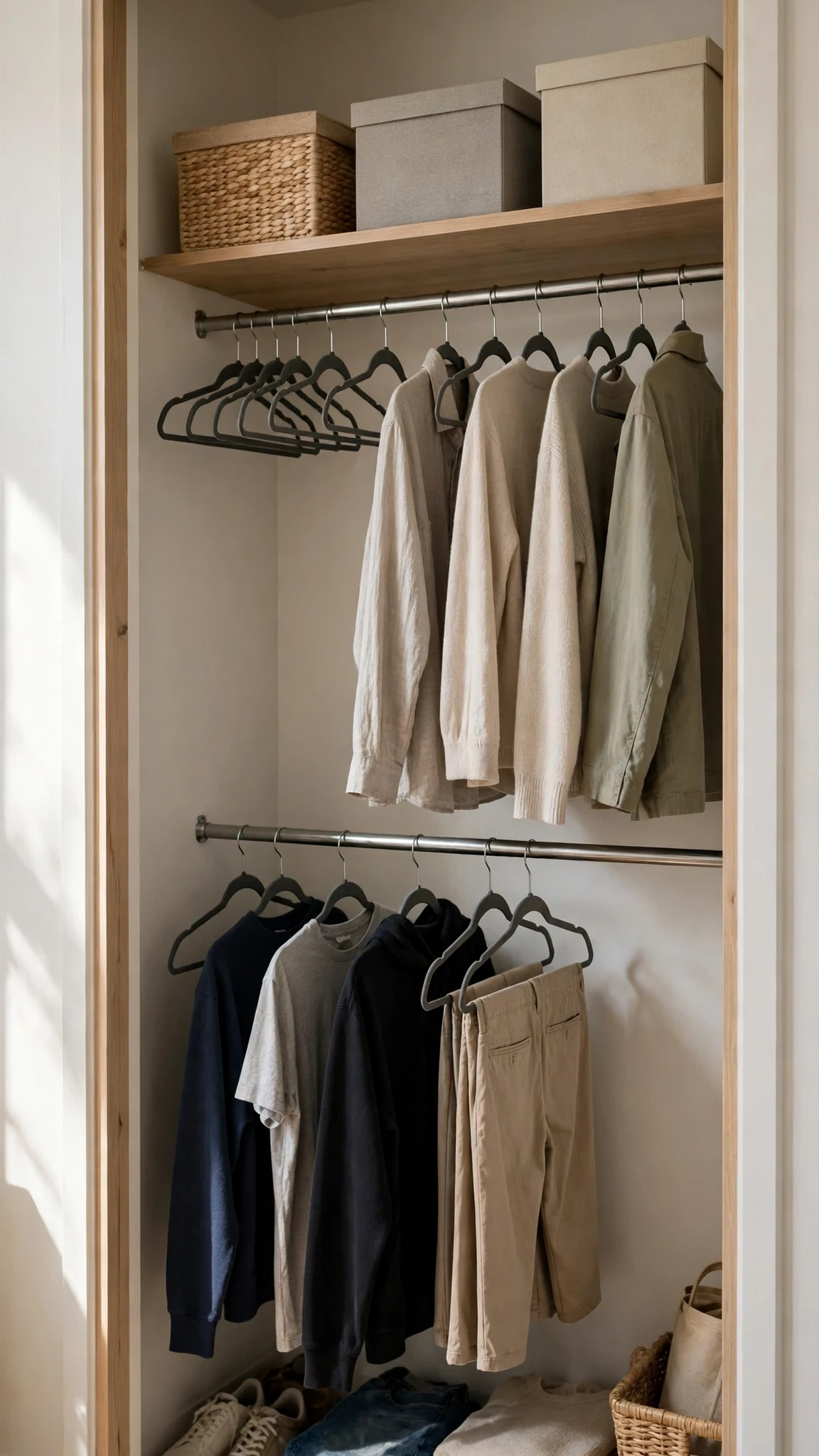
Turn a small rental closet into a working system with slim hangers, a second hanging rod where height allows, and small boxes for accessories. A closet that works means clothes stop living on chairs, and the bedroom stays tidy between laundry days without constant effort. Measure the closet height before adding a rod, keep daily clothes at hand height, use the top shelf for off-season items in labelled boxes, and add a shoe rack or door organizer so shoes stay off the bedroom floor.
- Styling tip: Slim hangers alone can free a surprising amount of rod space, especially with bulky dorm hoodies and jackets.
- Budget-friendly option: A second rod and a set of slim hangers cost far less than a new wardrobe and fit most rental closets.
- What to avoid: Packing the closet so full that nothing can be taken out without a pile falling down.
14. Use Under-Bed and Over-Door Storage for Small Rooms
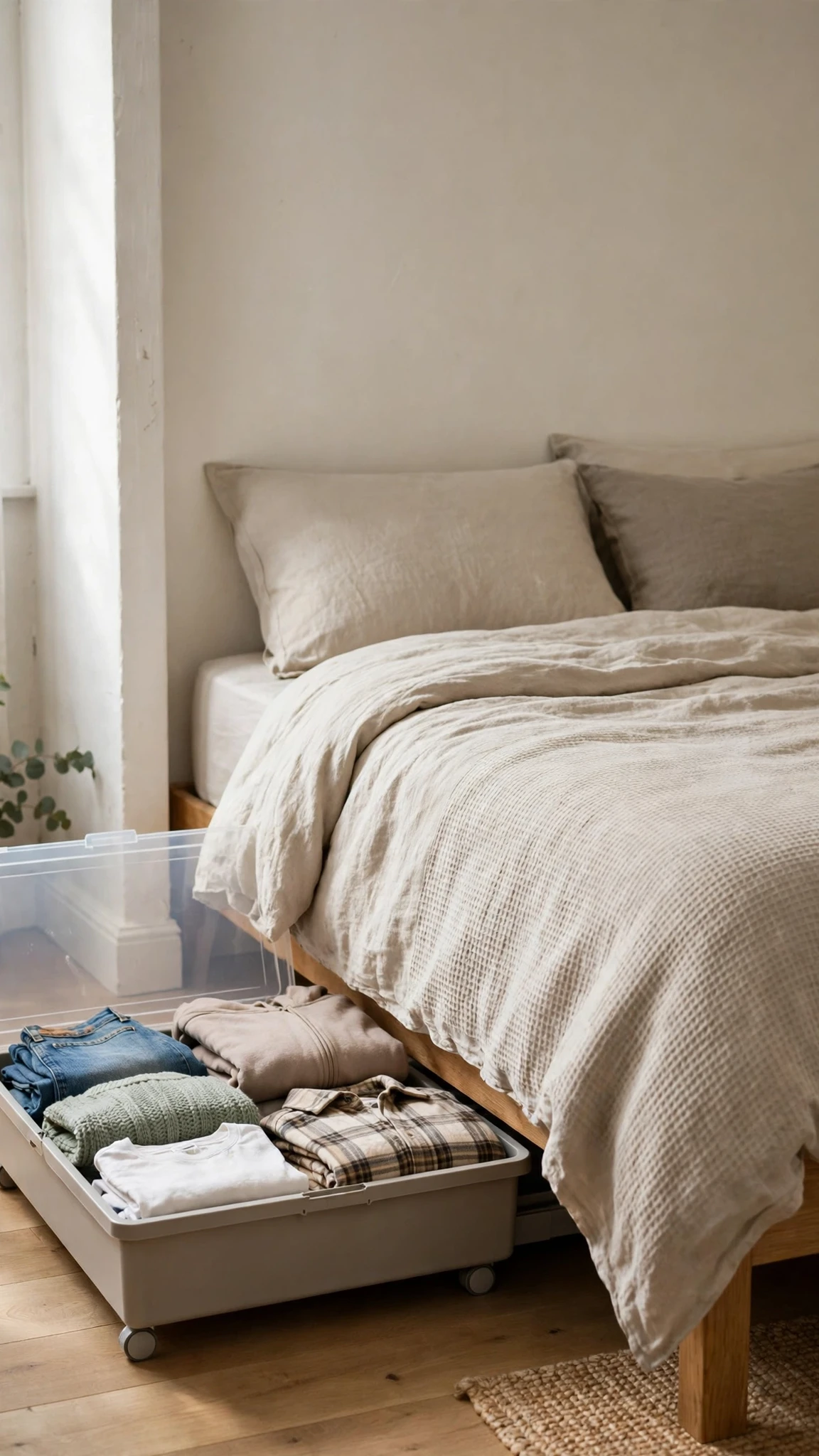
Use low rolling boxes under the bed for off-season clothes and spare bedding, and an over-door organizer for shoes and small items. These two spots use space that would otherwise sit empty, without adding bulky furniture to a small first apartment, and they keep the floor clear, which is what makes a small room feel larger. Measure under-bed clearance before buying boxes, choose lidded boxes to keep dust out, label boxes by season, and keep everyday items in the closet, so under-bed storage holds what is not needed this week rather than becoming a forgotten pile.
- Styling tip: Label boxes by season, not by vague words like miscellaneous, so you can find things without pulling every box out.
- What to avoid: Filling every over-door pocket until the door will not close properly, which turns storage back into clutter.
15. Give Study a Proper Desk and Chair, Not the Bed
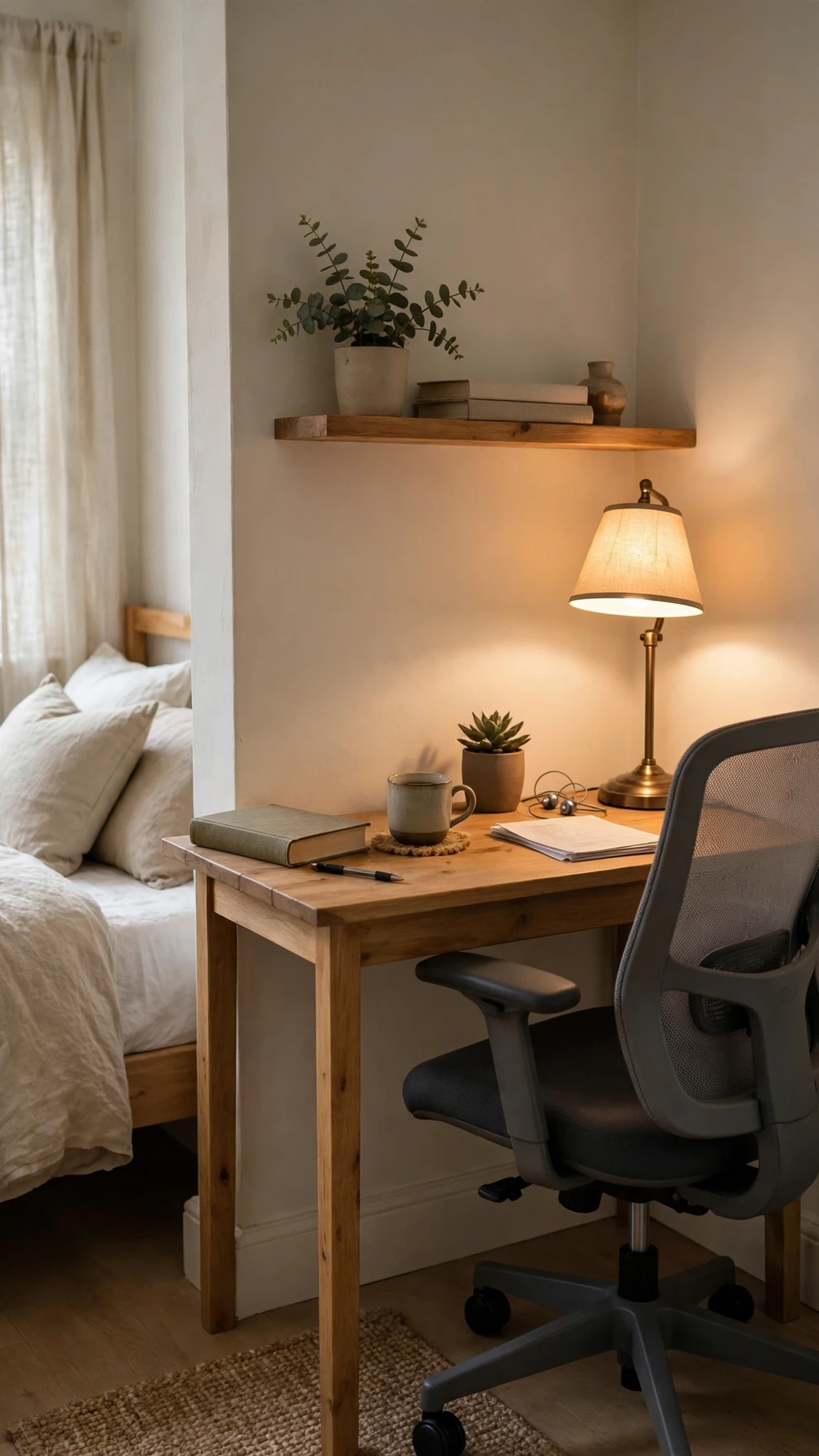
Set up a small desk and a supportive chair in a defined corner, so study and work have a place that is not the bed. A proper desk helps a first apartment bedroom feel like an adult workspace by day and a restful bedroom at night, especially when the desk can be tidied in minutes at the end of the working day. Choose a desk that fits the corner with room to pull the chair out, keep chargers in one tray, add a small lamp for evening work, and consider a fold-away or wall-mounted desk if the room is very small or shared.
- Styling tip: Keep a small tray for chargers and cables on the desk, so tidying it takes seconds rather than a full clear-out.
- What to avoid: A wide fixed desk that leaves no room for the bed to breathe, or a desk chair that blocks the walking gap.
16. Create a Morning Corner With a Mirror, Hooks, and a Launch Spot
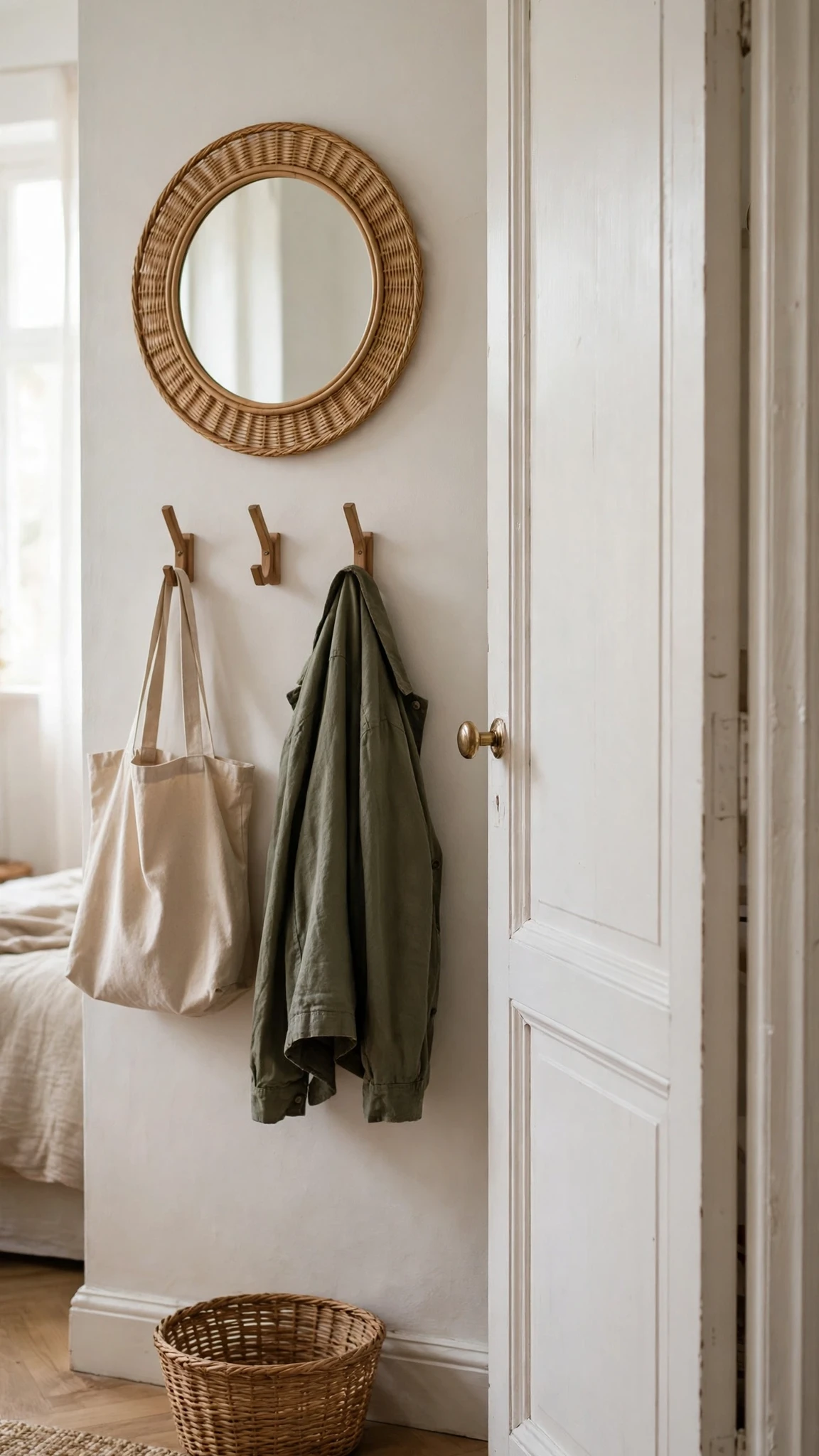
Put a mirror, two or three hooks, and a small tray or basket by the bedroom door to make a morning corner. Keys, a bag, and tomorrow’s jacket gain one home, so mornings start calmly instead of with a search through the bedroom, and the room stays tidier because things have a place to land when you come home. Hang hooks with adhesive fixings where drilling is not allowed, keep the mirror at a height that works for a quick check, empty the tray each evening, and give each person one hook and one tray section in a shared apartment.
Shared Rooms, Budgets, and Move-Out Ready Finishing
17. Share a Bedroom Without It Looking Like Two Dorm Rooms
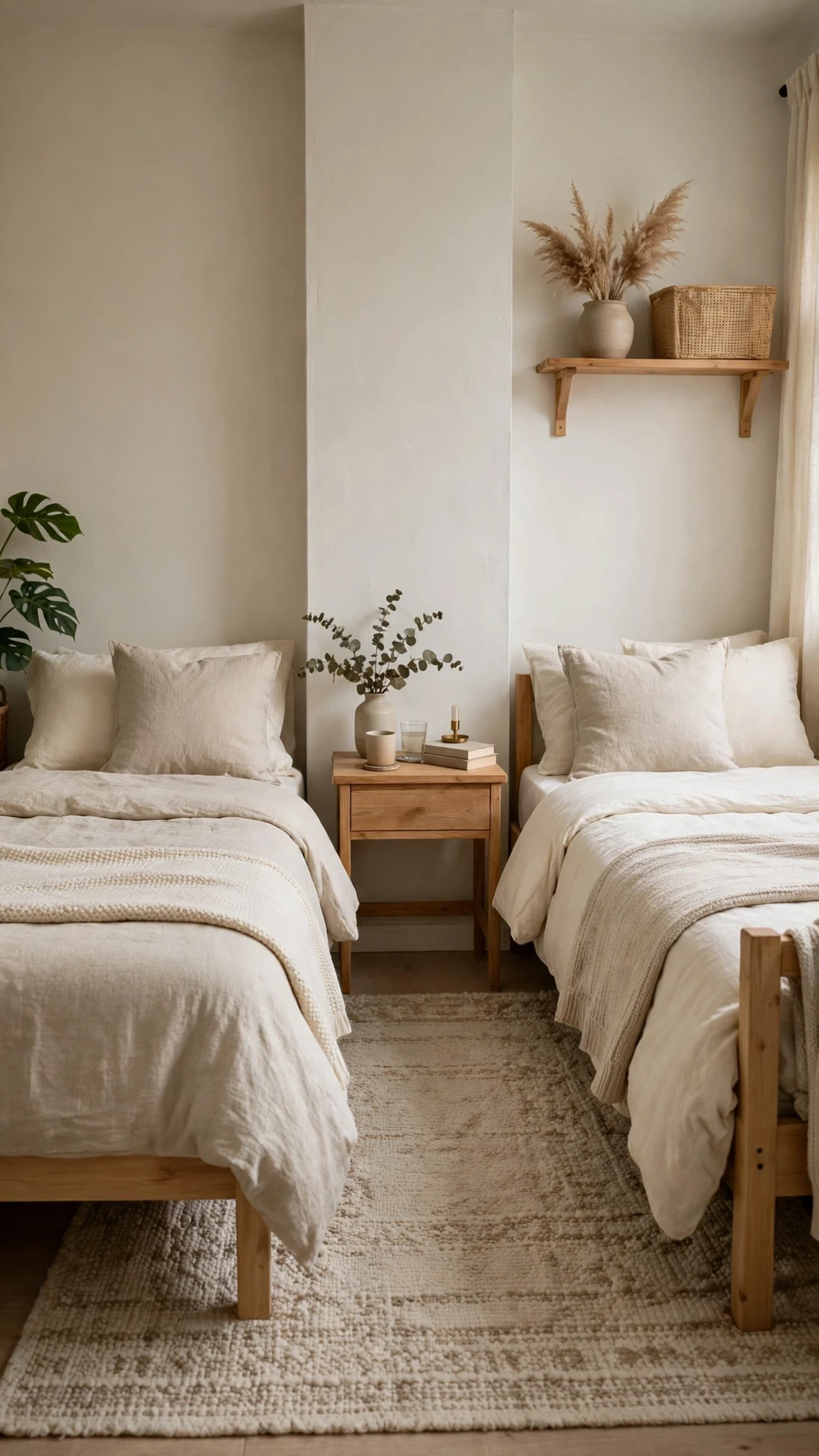
If a first apartment bedroom is shared, agree on one palette, give each person a defined bedside and storage zone, and use a rug and matching bedding tones to make the room read as one bedroom. Shared does not have to mean mismatched, and a few shared choices keep the room calm for both people, even when tastes differ. Split storage clearly, keep personal decoration to each person’s bedside zone, agree on light and noise routines for evenings, and anchor the middle of the room with a shared nightstand or two small matching nightstands.
- Styling tip: Matching bedding tones do more for a shared room than matching furniture, and they cost far less to agree on.
- What to avoid: Letting each half of the room drift into a separate colour scheme, which makes the bedroom feel like two dorm rooms pushed together.
18. Thrift First, Then Buy One New Piece That Changes the Room

Start with thrifted and secondhand pieces for a nightstand, dresser, or chair, then spend on one new piece that is touched daily, such as bedding or a rug. A room built this way gains character and fits a first-apartment budget far better than a full matching set bought at once, and in a city with many secondhand options, patience beats a hurried shopping trip. Measure before buying secondhand, check drawers, joints, and stability, clean pieces before they enter the bedroom, and let the new piece be the surface you see and touch most, so the room feels fresh even where most furniture is secondhand.
- Budget-friendly option: A secondhand lamp with a new warm bulb and a plain shade can look and feel new for very little money.
- Styling tip: Spend the new-piece budget on bedding or a rug, since those are the surfaces you see and touch most.
- What to avoid: Buying a full matching set in one afternoon, which often fits the shop better than it fits a small rental room.
19. Keep Personal Pieces, but Present Them in a Finished Way
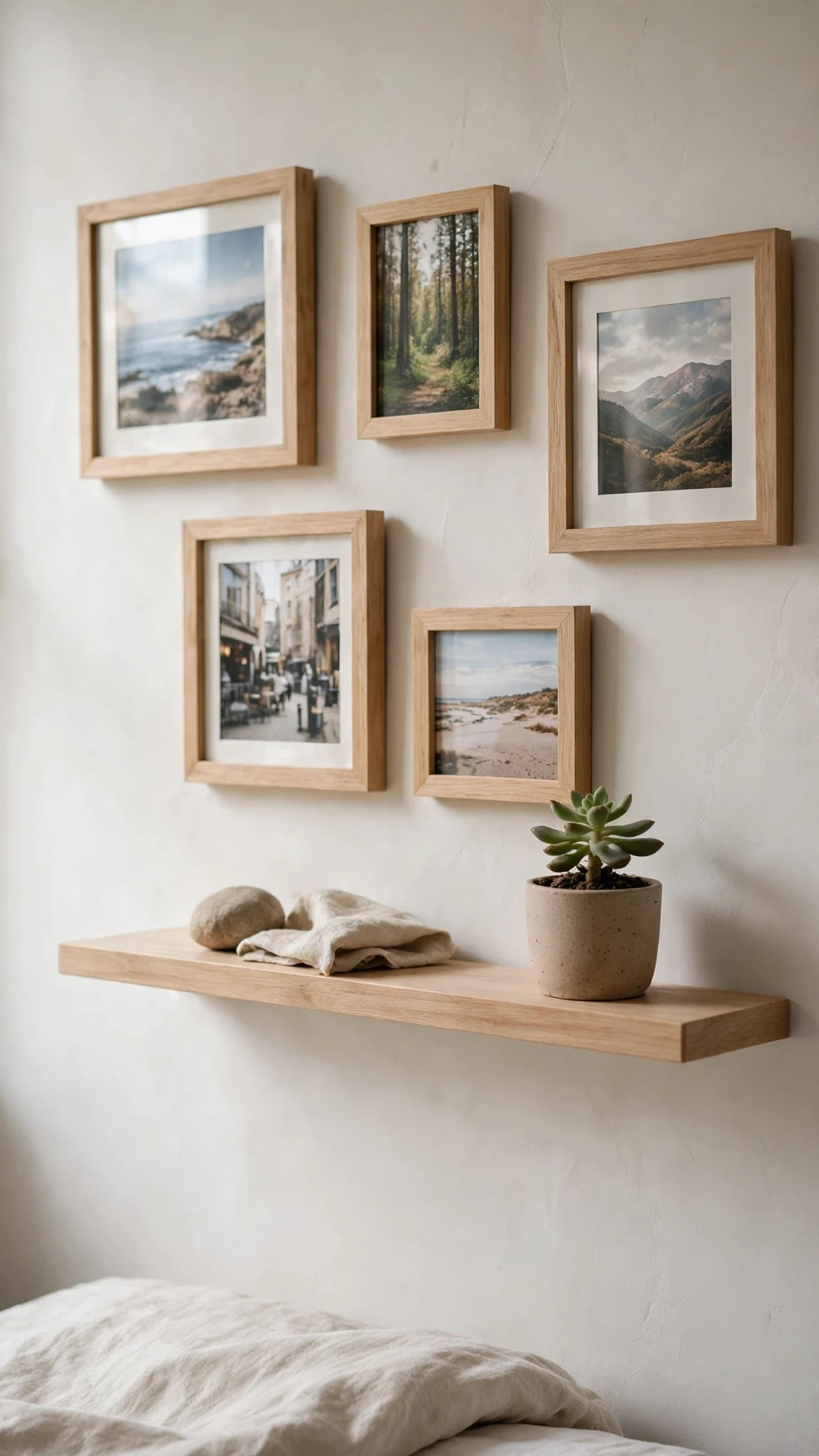
Keep the dorm pieces that still mean something, such as photos, a favourite print, or a small collection, but present them framed, grouped, and limited, rather than taped across every wall. A few chosen pieces tell a personal story, while a wall covered in loose posters still reads as a dorm, no matter how nice the bedding is. Frame the best photos in one finish, group small items on a shelf or a single wall section, rotate pieces seasonally instead of adding more, and add plants in simple pots on a sill or shelf rather than on the floor in a small room.
20. Make a Guest-Ready Corner Without a Spare Room

Keep a small guest-ready corner in the bedroom, such as a folding chair, a spare blanket in a basket, and a clear surface for a guest’s phone and glass. A first apartment rarely has a spare room, but a thoughtful corner means a friend can stay without the bedroom turning chaotic, and the same corner doubles as a reading chair spot on ordinary days. Store guest bedding in the under-bed boxes, keep the folding chair folded behind a door when not in use, and clear the bedside tray before a guest arrives, so the room feels welcoming rather than improvised.
21. Finish Move-Out Ready, With a Lease Check and a Reversibility Log
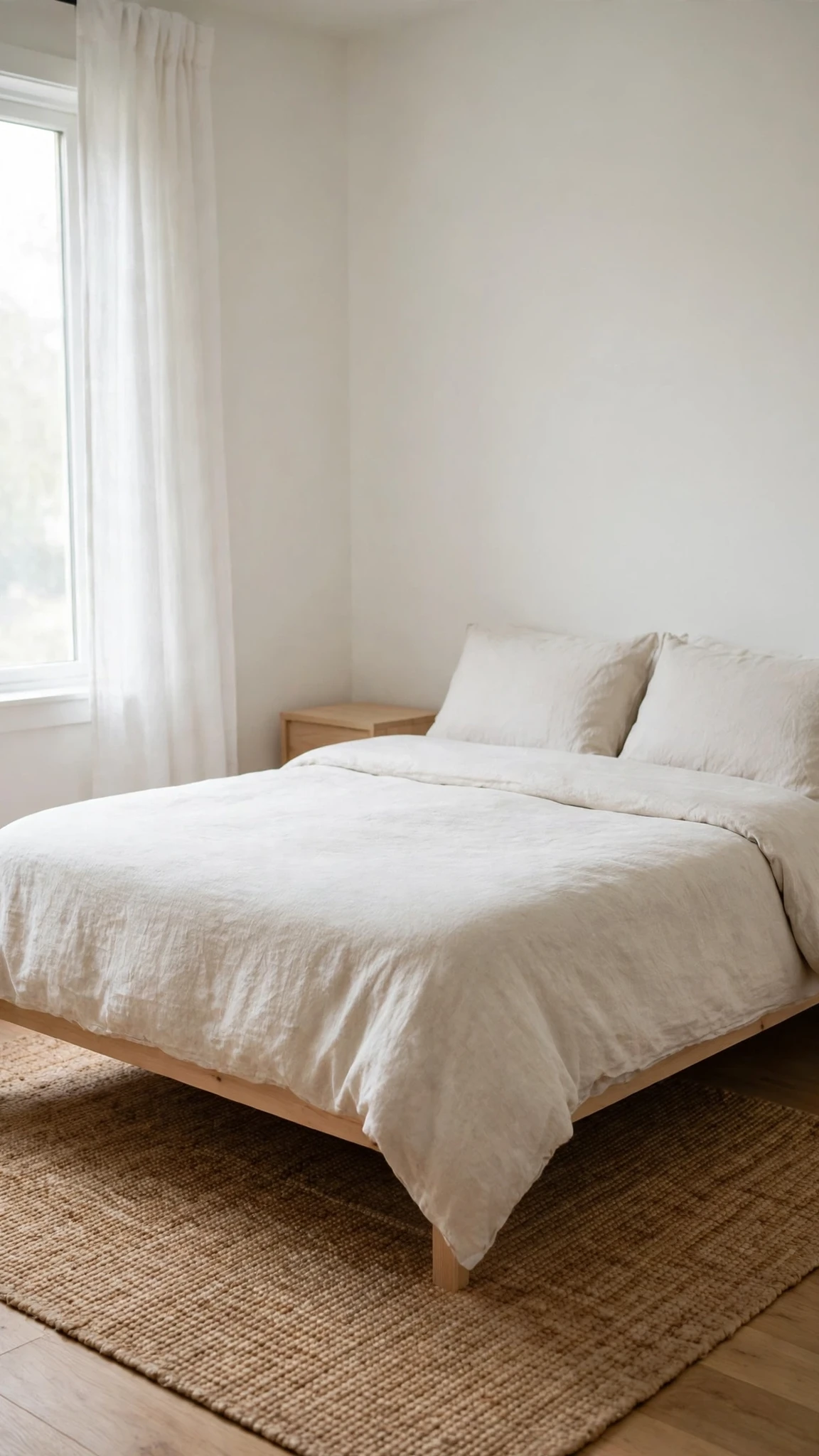
Finish the bedroom move-out ready from the start: check the lease for wall, hook, and wallpaper rules, photograph the room on move-in day, and keep a short log of every change and how it reverses. When the next move comes, the bedroom can return to its starting state without a repair project, and that calm ending is worth planning for at the beginning. Save original curtains, rods, and hardware in a labelled bag, note the removal steps for wallpaper and adhesive strips, fill only what the lease requires, and use the weekend test for every change: if it cannot be undone in a weekend, think twice before doing it.
- Styling tip: Keep the reversibility log with the lease paperwork, so it is easy to find on the last week, when time is shortest.
- What to avoid: Leaving adhesive residue, wallpaper edges, or filled holes to deal with on the last day, when everything else is already packed.
FAQS
What should I keep from my dorm room for my first apartment?
Keep bedding and personal pieces that are still in good condition and suit a calmer palette, such as a favourite blanket, framed photos, or a good lamp. Let go of stained, broken, or dorm-only items that will fight the new room. Anything you have not used for a full term probably does not need a new home.
How do I decorate a first apartment bedroom on a budget?
Buy in bedroom order, starting with the bed, bedding, light, and storage, and leave decoration until last. Thrift furniture where you can, reuse what still works from dorm life, and spend on one new piece you touch daily, such as bedding or a rug. A small, planned list stops impulse buys from eating the budget.
How can I make a first apartment bedroom look less like a dorm?
Choose one calm palette, add a real headboard, and frame art instead of taping loose posters to the wall. Layer warm light, lay a rug beside the bed, and edit dorm pieces down to a few favourites. The room looks grown-up when the bed, walls, and light work together, not when everything from the dorm moves in.
What do I need first for a first apartment bedroom?
Start with a bed, a mattress protector, and bedding, then a dresser or closet system, a lamp, curtains, and a laundry basket. These pieces cover sleep, storage, light, and privacy, which are the basics of a working bedroom. Decoration, extra art, and plants can wait until the essentials are in place and the room feels usable.
How do I decorate a rental bedroom without damaging the walls?
Use adhesive strips rated for the frame weight, removable wallpaper, leaning art, and curtains on an existing or tension rod, and check the lease before you hang anything. Keep changes light and reversible, and save original hardware and curtains in a labelled bag. That way every decoration can come down cleanly at the end of the tenancy.
How do I share a small apartment bedroom with a roommate?
Agree on one shared palette and give each person a defined bedside and storage zone, so the room reads as one bedroom rather than two halves. Use a rug and matching bedding tones to tie the two sides together, and keep personal decoration inside each person’s own zone. Agree on evening light and noise routines early, so sharing stays comfortable.
How do I protect my deposit when decorating a rental?
Photograph the room on move-in day, keep every change reversible, and save original curtains and hardware for the final inspection. Remove adhesive strips and removable wallpaper by following their removal steps, and fill only what the lease requires. A short log of each change and how it reverses makes the last week far less stressful.
Conclusion
Moving from a dorm to a first apartment is really a series of small upgrades, not one big purchase. A proper bed, layered bedding, warm light, smart storage, and one calm palette do most of the work, and everything else can wait until the room is already working well. The grown-up feeling comes from those basics being right, not from spending the most money in the shortest time.
Start this weekend with the dorm edit and one bedroom upgrade, whether that is a real dresser, a headboard, or a rug beside the bed. Live with that change for a few evenings, then pick the next one, and let the room grow into a first apartment bedroom that feels like your own, while still being easy to hand back one day.