21 Dark Moody Fall Bedroom Ideas for a Cozy Autumn Retreat
A dark moody fall bedroom is not about making a room darker for its own sake. It is about using deep autumn colors, heavier textures, and low warm light so the room feels like a proper retreat when the evenings turn cool and the days get shorter. These dark moody fall bedroom ideas are written for real bedrooms, with practical ways to get the look without a renovation, without overheating at night, and without turning the room into a Halloween display.
The ideas below follow a sensible order, starting with walls and color, then the bed, then lighting, then the smaller autumn details that finish the room. After that come cozy corners and storage for the summer-to-fall swap. You do not need to do all 21. Pick the one or two changes that will make the biggest difference in your room, and build from there.
Dark Moody Fall Bedroom Ideas for Walls and Autumn Color
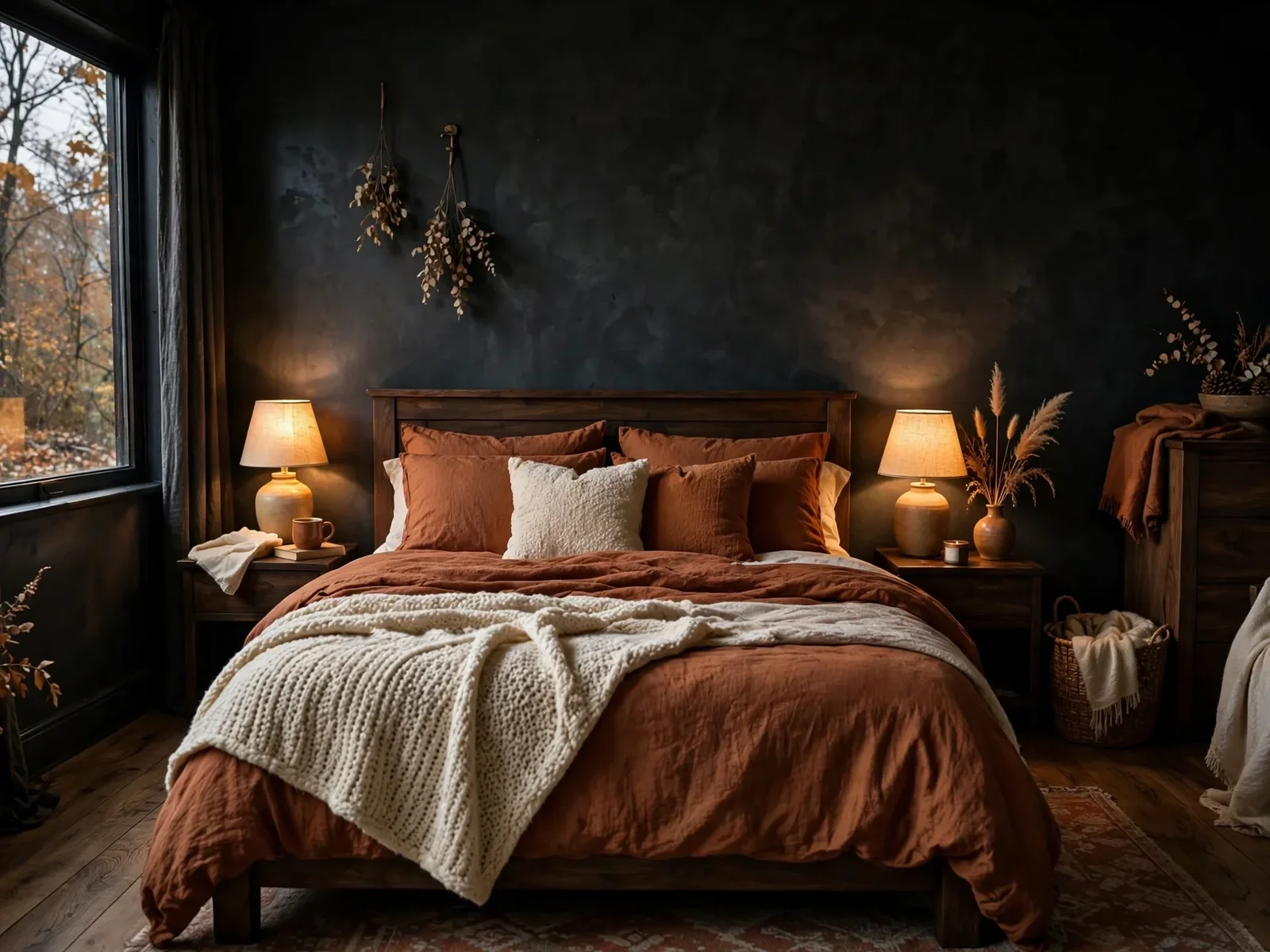
1. A Charcoal Accent Wall Behind the Bed, Warmed by Rust and Cream

A single charcoal wall behind the bed gives the room a clear focal point without the weight of four dark walls. Charcoal reads as modern and calm rather than harsh, and it makes the bed itself stand out, especially in the evening when lamps are on. The trick is to let rust do the autumn work in small amounts, with cream bedding keeping the whole look soft and readable, so the room feels seasonal rather than cold.
- Color combination: Charcoal on the bed wall, a calm dark neutral elsewhere, cream bedding, and rust in a throw and one cushion only.
- Styling tip: Check the paint in evening light before committing, since charcoal can look blue or grey under the wrong bulb.
- What to avoid: Adding rust cushions, rust curtains, and rust art all at once, which turns one strong signal into clutter.
2. Warm Espresso Walls With Amber Light and Brass
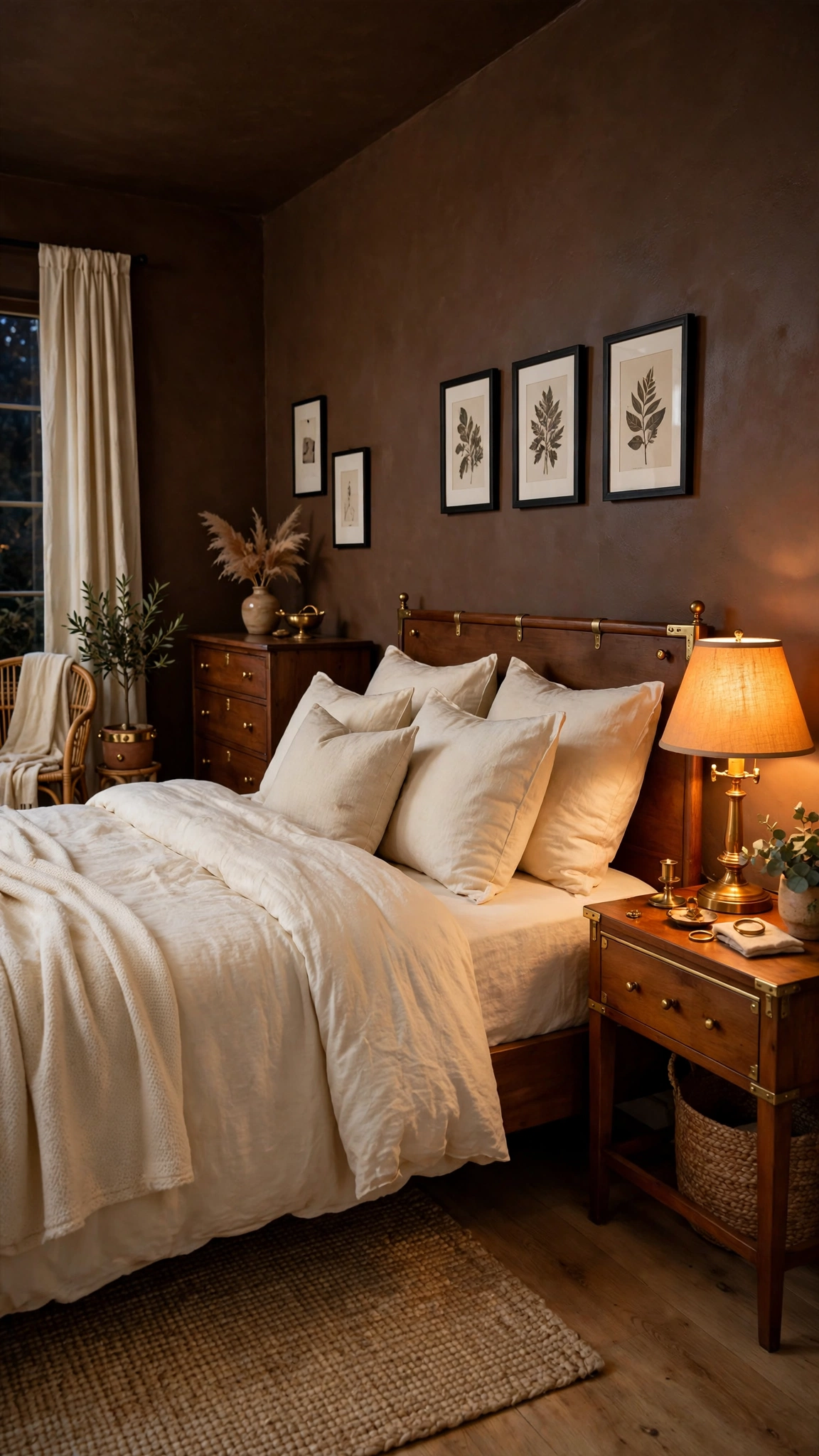
Espresso brown is warmer than charcoal or black, which makes it a natural fit for fall, when you want a room that feels like a warm drink on a cool evening rather than a dramatic statement. The brown needs warm undertones, not grey ones, or it can go flat and muddy. Amber-toned lamps and a little brass bring light back into the room, so the walls glow instead of sitting heavy.
3. Muted Olive Walls With Rust Bedding for an Earthy Fall Look

Muted olive gives a softer, more earthy version of a dark fall bedroom, closer to late autumn leaves than to a bold green statement wall. It works well when the rest of the room stays simple, because the color itself already carries a natural, outdoor feeling. Rust bedding is the autumn signal here, and warm wood plus cream cushions keep the pairing from looking too flat or too dark.
- Color combination: Muted olive walls, rust bedding in cotton or linen, warm wood furniture, and cream cushions.
- Styling tip: In a larger room, olive can go on all four walls; in a smaller room, keep it to the bed wall and let the other walls stay lighter.
4. A Dark Wood Slat Panel Behind the Bed for Depth and Warmth

A dark wood slat panel turns the bed wall into a textured feature without paint or wallpaper, and the vertical lines give the room structure even when the bedding is plain. Walnut and other dark wood tones already feel like fall, so the panel does much of the seasonal work on its own. Warm lamps are important here, because low light shows off the wood grain in a way that bright overhead light never does.
- Styling tip: Measure the bed wall first and keep the panel to that wall only, so the lines frame the bed instead of closing the room in.
- Budget-friendly option: A narrower panel, just wider than the bed, gives the same focal effect for less wood and less work.
5. Soft Black Walls Balanced by Cream Bedding and Warm Wood

Soft black is the darkest wall choice in this list, so the balance plan matters more than the paint itself. A warm-toned black, rather than a cold blue-black, keeps the room from feeling stark, and cream bedding becomes the largest light block in the room. Warm wood nightstands and a light rug do the rest of the work, giving the eye somewhere to rest so the dark walls feel intentional and livable.
The Fall Bed and Heavier Bedding Layers
6. A Chunky Knit Throw Over a Wool Blanket at the Foot of the Bed
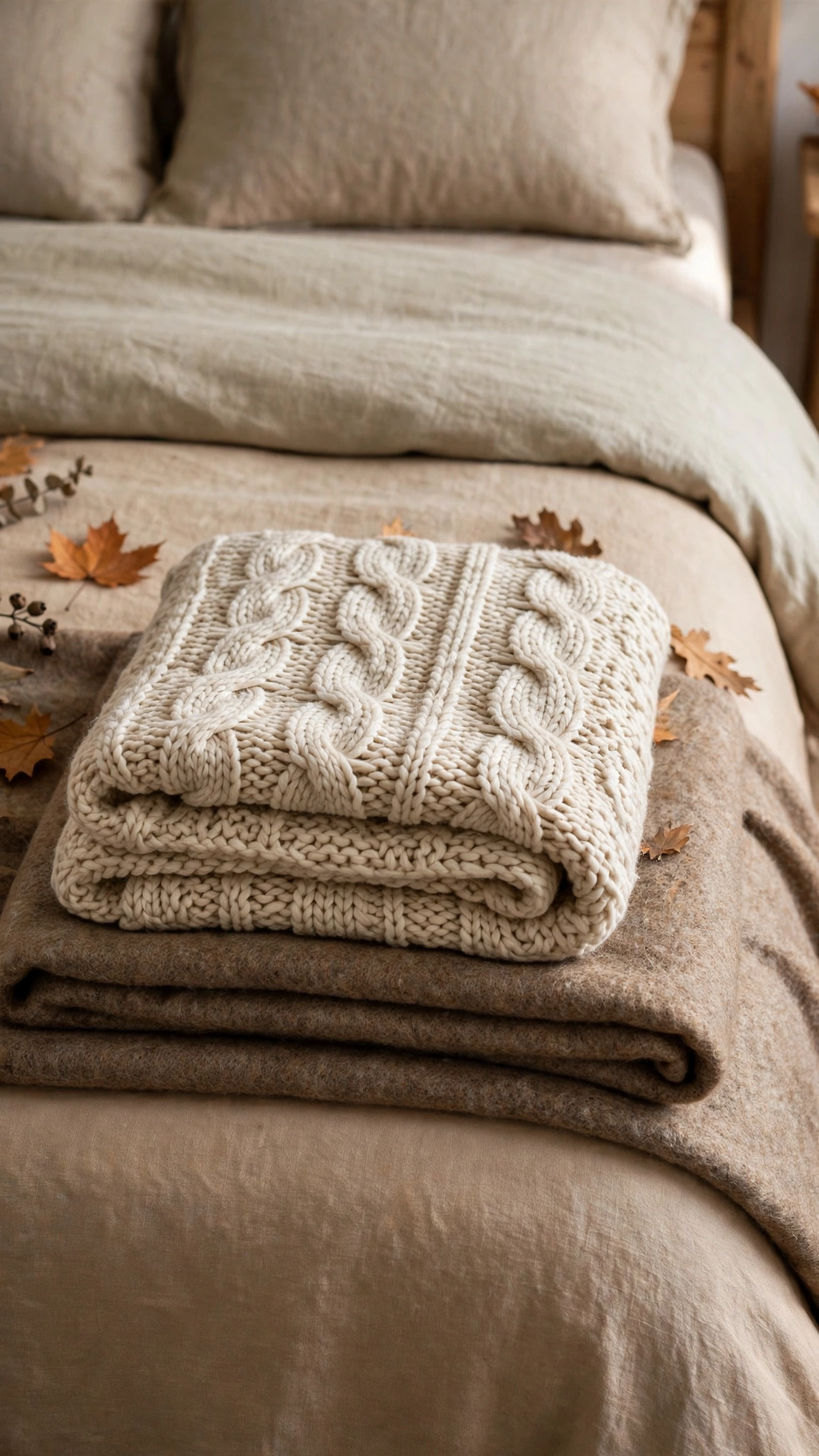
Layering a chunky knit throw over a wool blanket at the foot of the bed is the fastest way to make a bed look and feel like fall. The texture does the work before color even registers, and the throw can simply be pushed aside at night if you get warm, which makes this a practical layer rather than just decoration. Folded neatly, it keeps the bed looking tidy instead of piled up, and it is easy to swap for a lighter throw when the season changes.
- Color combination: Cream, rust, or brown for the throw, over a plain wool blanket in a darker tone.
- Styling tip: Fold the throw in thirds and lay it across the lower third of the bed, so it frames the bed rather than covering it.
7. A Burgundy Velvet Duvet With Breathable Cotton Sheets Underneath
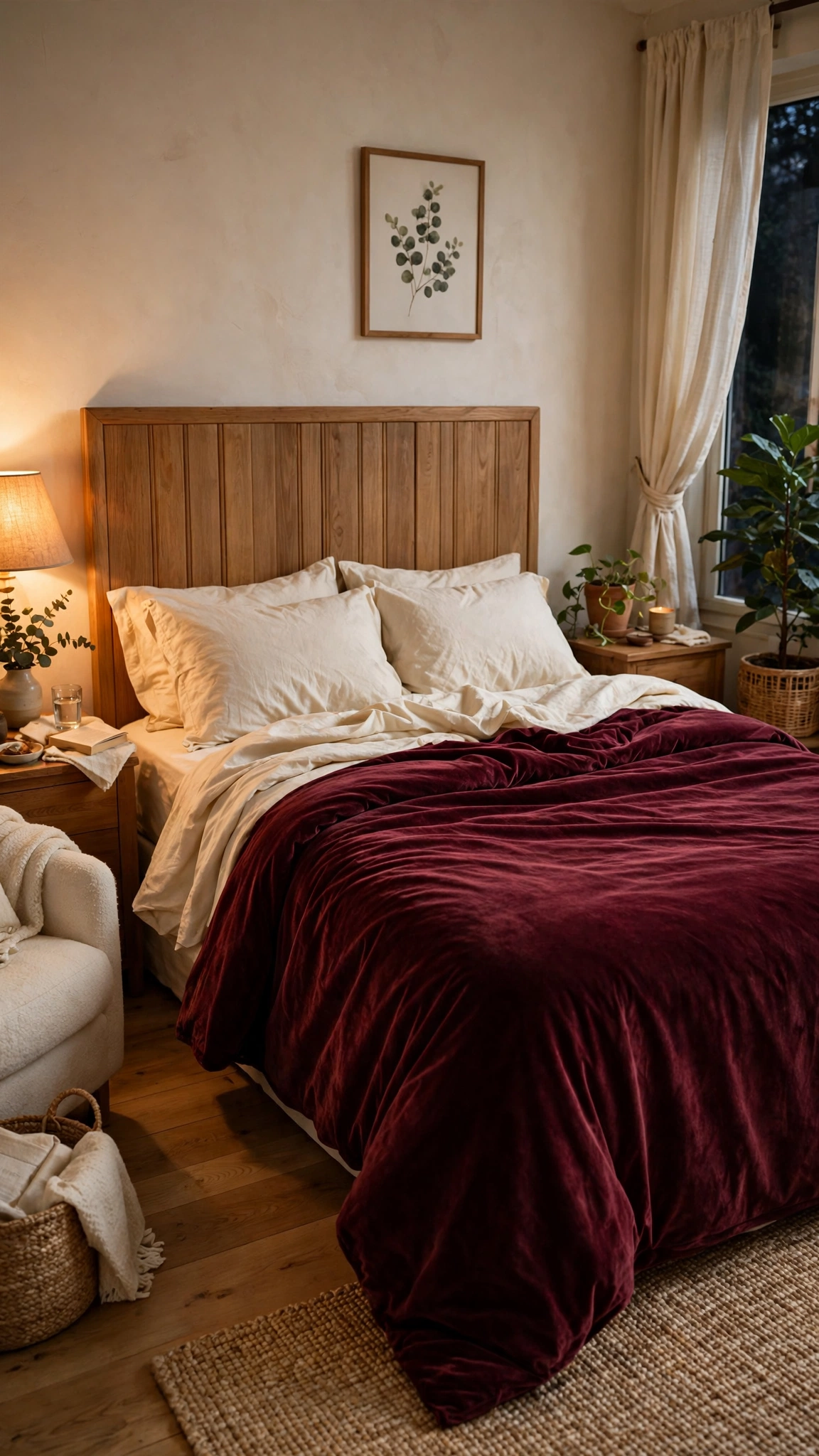
A burgundy velvet duvet gives the bed instant richness, but velvet only works for sleep when the layers underneath can breathe. Deep burgundy, rather than bright red, keeps the look moody and grown-up, while cream or taupe cotton sheets stop the bed from feeling heavy or hot. The pairing matters because the top layer is what you see and the bottom layers are what you sleep in, and both jobs need to be handled well.
- Styling tip: Pair the velvet duvet with plain sheets and plain cushions, so the rich fabric is the one luxury in the bed.
- What to avoid: Washing dark velvet with light towels or bright clothes, which leaves lint and fades the color faster.
8. Brushed Cotton and Flannel Sheets for Cool Fall Nights

Changing the sheets is the lowest-cost first step in a summer-to-fall swap, and it changes how the bed feels from the very first night. Brushed cotton feels softer and slightly warmer than plain cotton, while flannel gives more warmth for genuinely cold nights, so the choice depends on how cool your room actually gets. Keeping the sheet color plain, in cream, grey, or rust, means the new sheets will work with whatever duvet and throws you already own.
- Budget-friendly option: Try the sheet change before buying a heavier duvet, since many rooms feel warm enough with flannel sheets and the existing duvet.
- Styling tip: If your room runs warm, choose brushed cotton over flannel, so you get the soft fall feel without waking up too hot.
9. A Rust, Ochre, and Brown Cushion Palette, Layered in Order
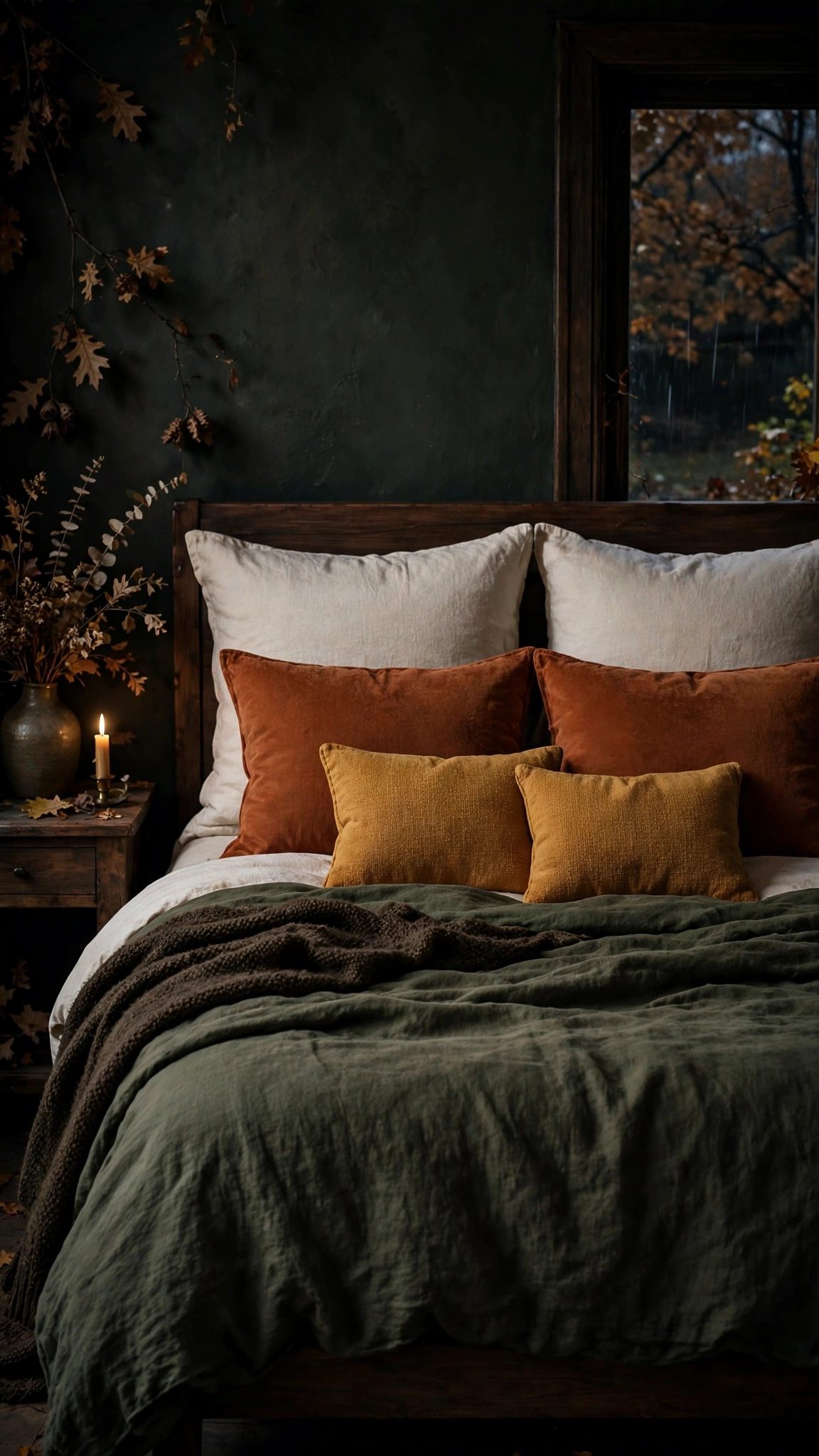
Cushions work best in fall when they are layered in a clear order, from larger plain cushions at the back to smaller rust and ochre cushions at the front, so the autumn color builds gradually instead of arriving all at once. Limiting the palette to three tones keeps the bed rich rather than busy, and it stops the room from tipping into a pumpkin-colored overload. The order also makes the bed easy to remake in the morning, which matters more than it sounds when you are doing it every day.
10. A Heavier Fall Duvet That Still Lets You Adjust at Night

A heavier fall duvet should solve the cool-night problem without creating a new one, which is waking up too hot at two in the morning. The answer is layering: a breathable sheet and a light blanket underneath, with the heavier duvet on top and a throw at the foot for extra warmth. That way, when the room warms up overnight, you can push one layer aside instead of throwing the whole duvet off and then getting cold again.
- Styling tip: Choose the duvet weight for your actual room temperature, not for the coldest night of the year, and let the throw handle the coldest nights.
- What to avoid: Pairing a heavy duvet with flannel sheets and a thick wool blanket all at once, which leaves no layer left to remove.
Warm, Low Light for Short Autumn Evenings
11. Amber Bedside Lamps on Dimmers for Evening and Reading
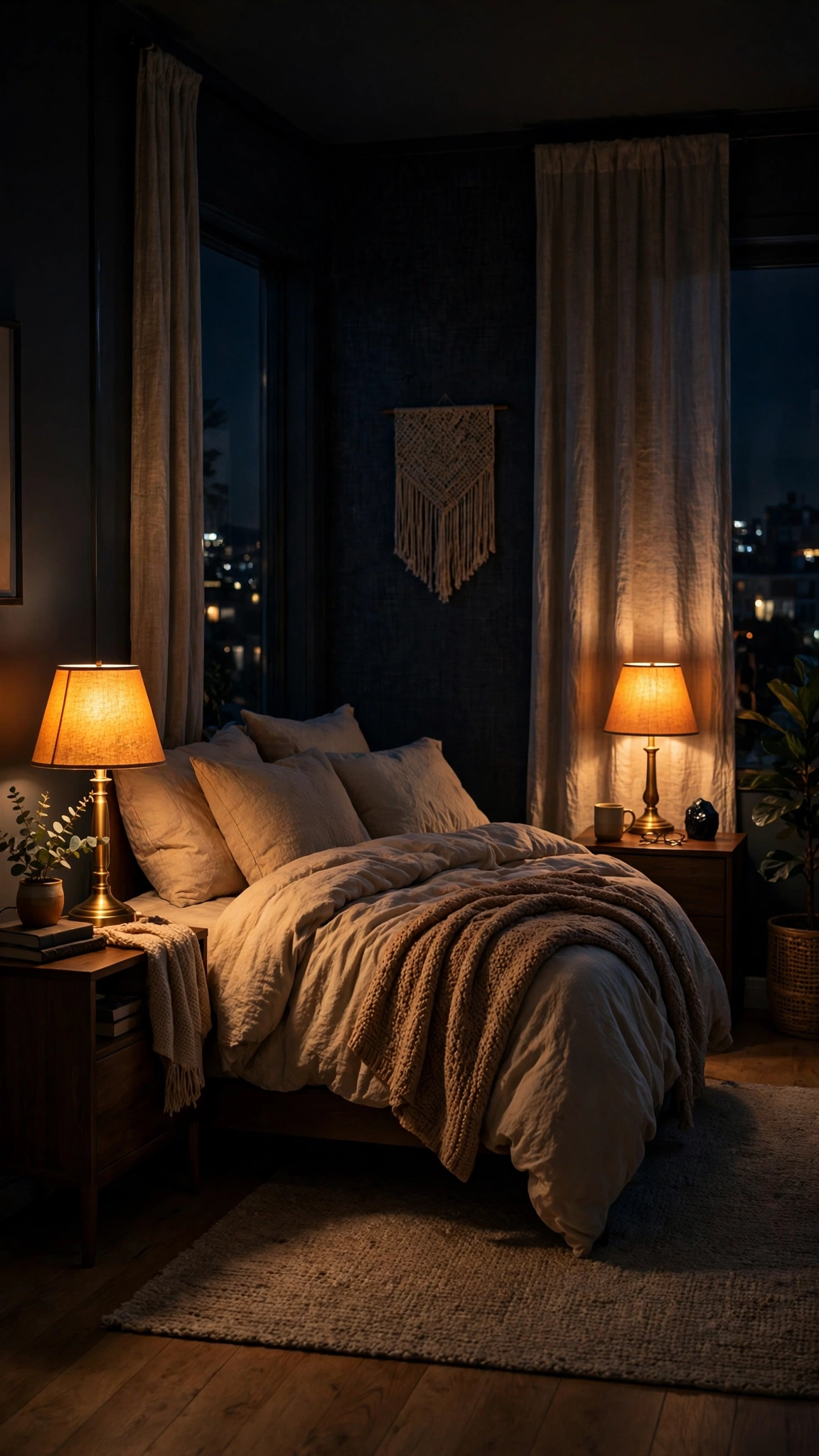
Amber bedside lamps on dimmers are the single most useful lighting change for a dark fall bedroom, because one lamp can do two jobs. Turned low in the evening, the lamp gives the room a soft, warm atmosphere; turned up, it gives enough light for reading in bed. That flexibility matters in a dark room, where one bright overhead light feels harsh and one fixed low light is never quite enough for a book.
- Color combination: Warm amber bulbs with shades that soften the light, rather than clear glass that throws glare.
- Styling tip: Set the lamp height near pillow level, so the light falls on the page and not straight into your eyes.
- Budget-friendly option: A three-way bulb gives much of the benefit of a dimmer without any rewiring.
12. Warm Wall Sconces Beside the Bed for a Soft Evening Glow
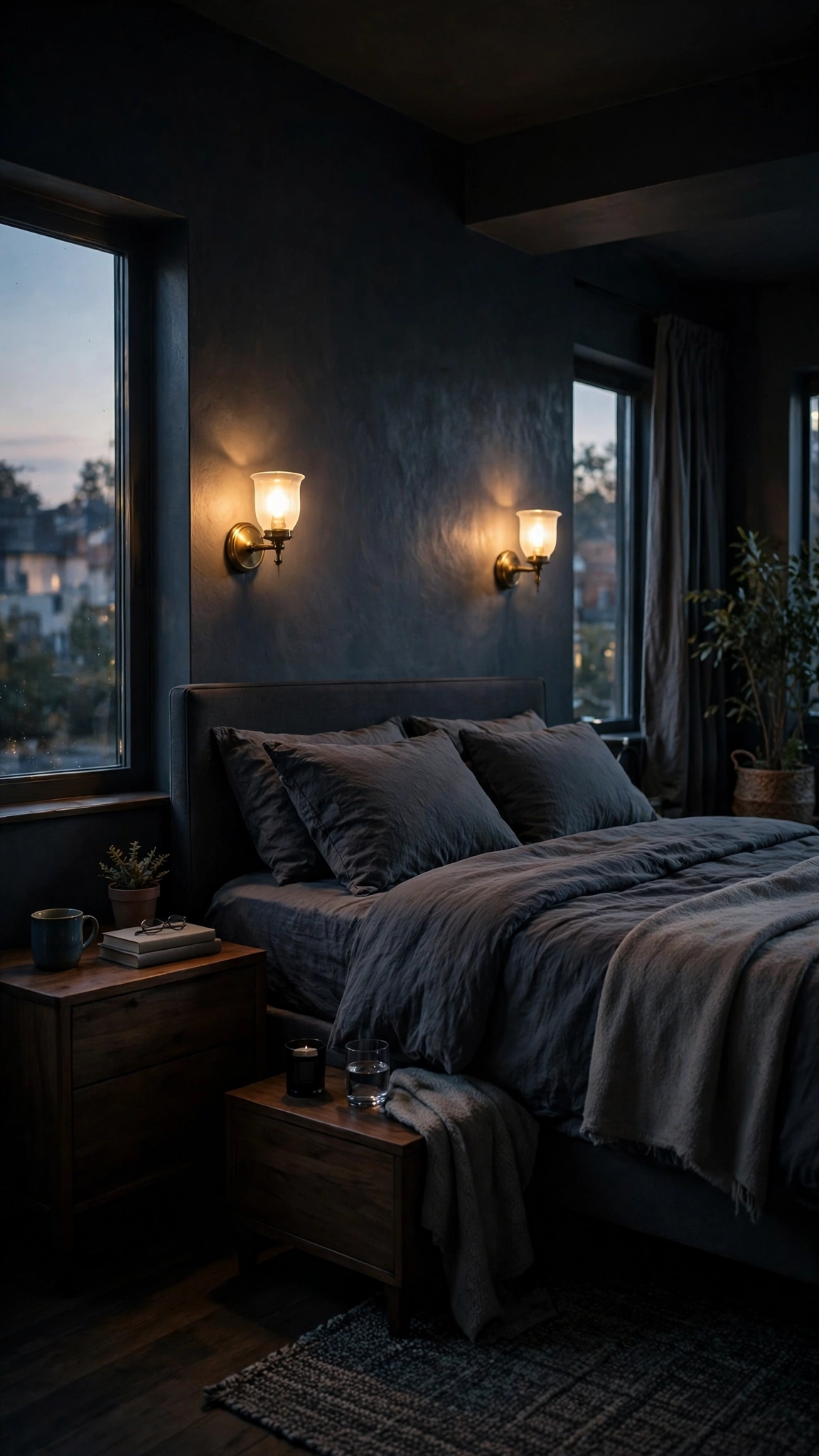
Wall sconces beside the bed push light sideways at wall height, which suits a dark room far better than light coming from above, and they free up nightstand space at the same time. The glow is soft and even, so the room feels lit without any one spot feeling bright, and the wall itself becomes part of the lighting plan. Pairing sconces with one bedside lamp still makes sense, because sconces handle atmosphere while the lamp handles reading and other close work.
13. Candle-Style Lanterns on a Tray, Without Open Flames Near Fabric
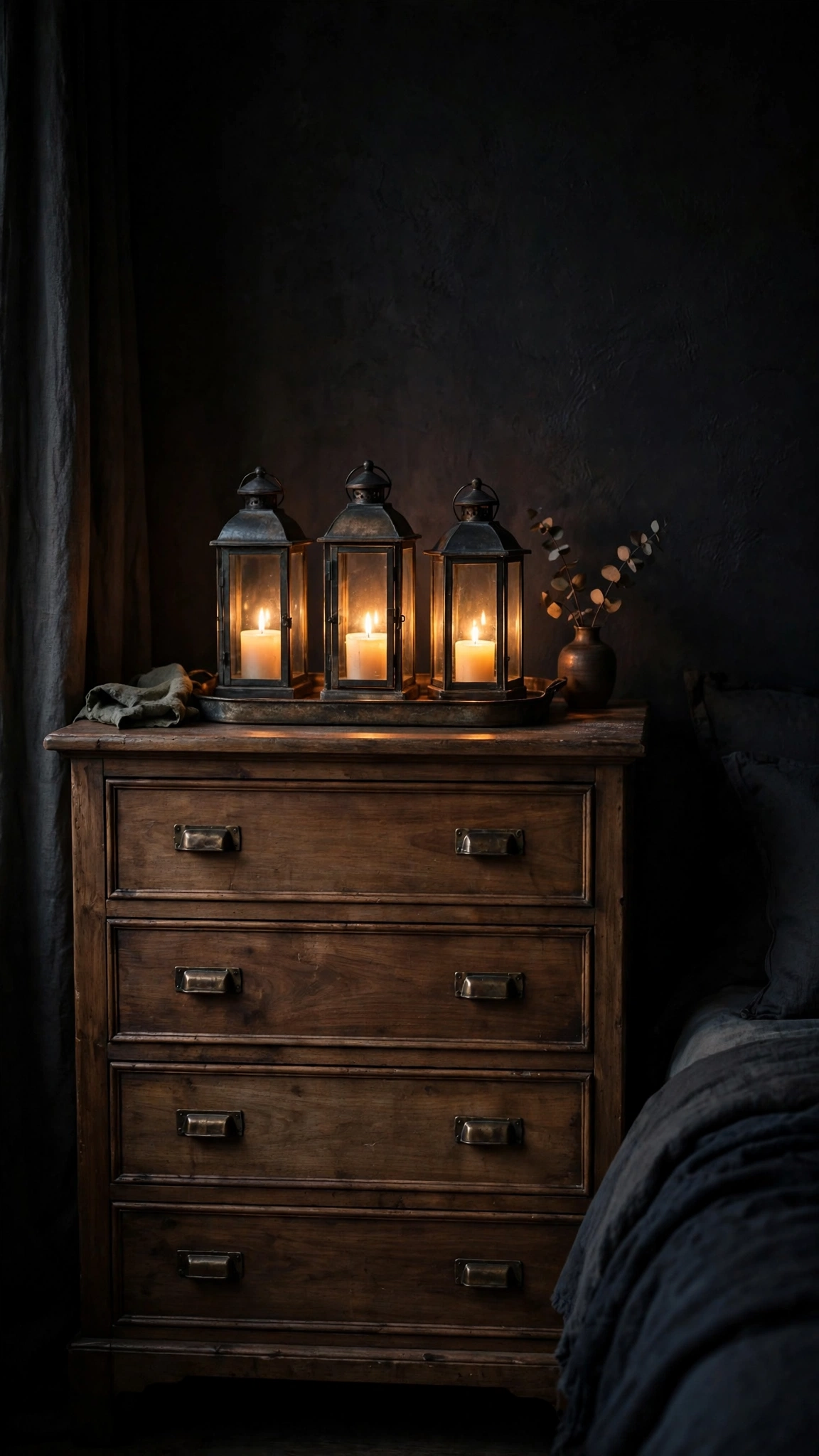
Battery candles and enclosed lanterns grouped on a tray give the flicker and warmth of candlelight without the risk of an open flame near bedding, curtains, or dried plants, which is a real concern in a bedroom full of fabric. Grouping them on a tray keeps the display contained and easy to move, and a timer means the glow appears in the evening without you having to remember it. Warm, flickering battery candles read as candlelight, while cool white ones just look like small electric lights.
- Styling tip: Group three lanterns of different heights on one tray, so the display looks gathered rather than scattered.
- What to avoid: Placing real candles near dried grasses, garlands, or curtain edges, even for a short evening, since dry material catches fast.
14. Heavy Curtains Over Sheers for Evening Warmth and Morning Light
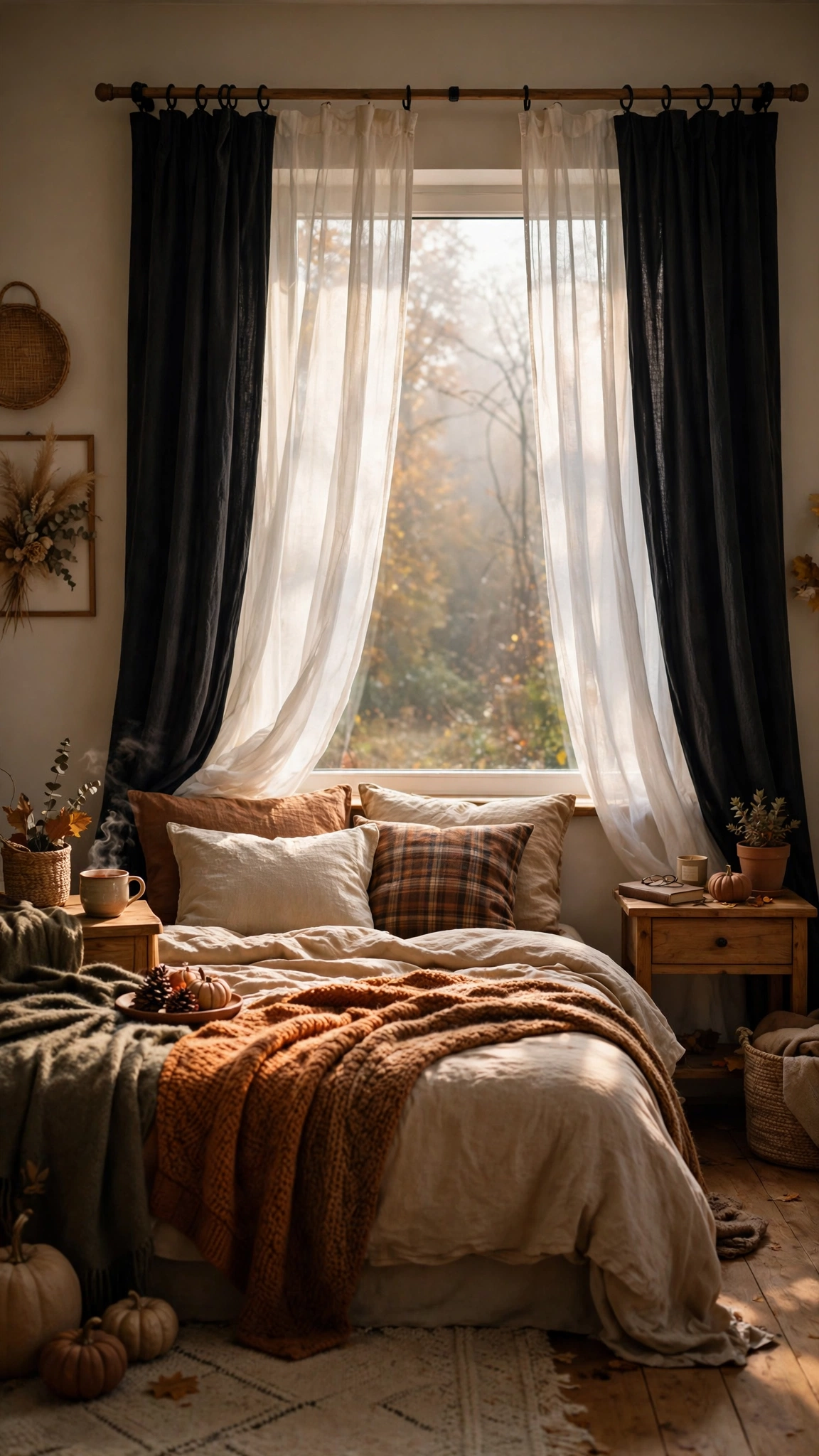
Heavy curtains over sheers solve two opposite problems at once, which is why the two-layer plan is worth the extra fabric. In the evening, the heavy layer closed gives warmth, privacy, and a finished look that matches the dark fall room. In the morning, opening the heavy layer while the sheers stay closed lets soft daylight in without glare, so a dark bedroom does not feel heavy at waking time, when short autumn days can already make mornings feel dim.
- Color combination: Rust, brown, or charcoal for the heavy layer, with plain cream or white sheers underneath.
- Styling tip: Hang the sheer layer closest to the window and the heavy layer in front, and keep cords tied up and out of reach.
Autumn Nature, Art, and Seasonal Details
15. Dried Grasses and Branches in a Tall Vase by the Bed or Dresser
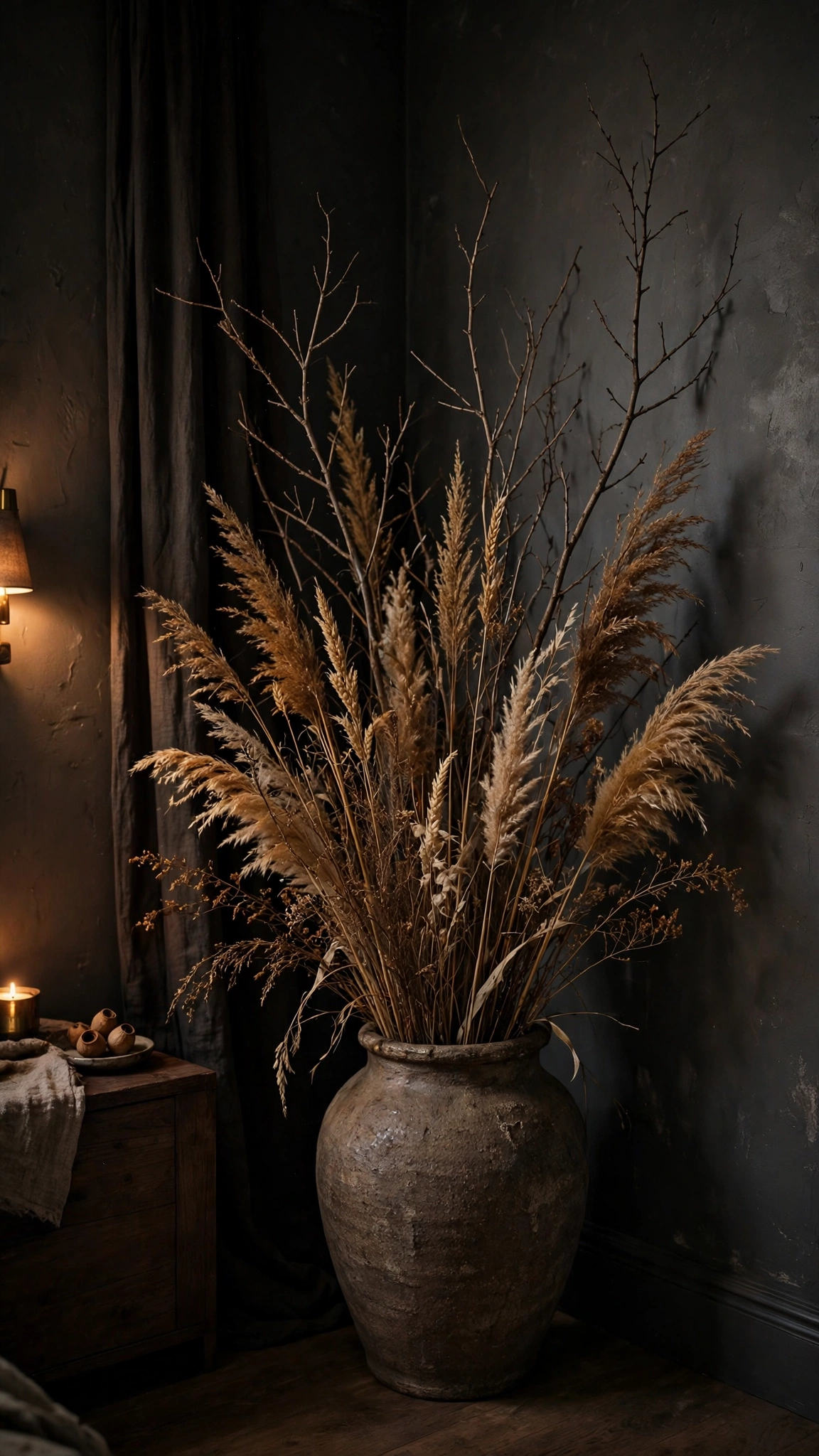
Dried grasses and bare branches in a tall vase are a low-maintenance autumn cue, because they last all season, need no watering, and signal fall through shape and texture rather than bright color. Muted gold and brown stems suit a dark room better than anything dyed or glittered, and a heavy vase matters, since tall stems tip easily on a dresser or beside a bed. Kept away from bedding and flames, and dusted gently from time to time, one vase is enough to make a corner feel seasonal.
- Styling tip: Choose one tall arrangement for one spot, rather than small dried bunches on every surface.
- What to avoid: Placing the vase where bedding or a curtain can knock it over in the night.
16. Moody Autumn Landscape and Leaf Prints in Dark Frames
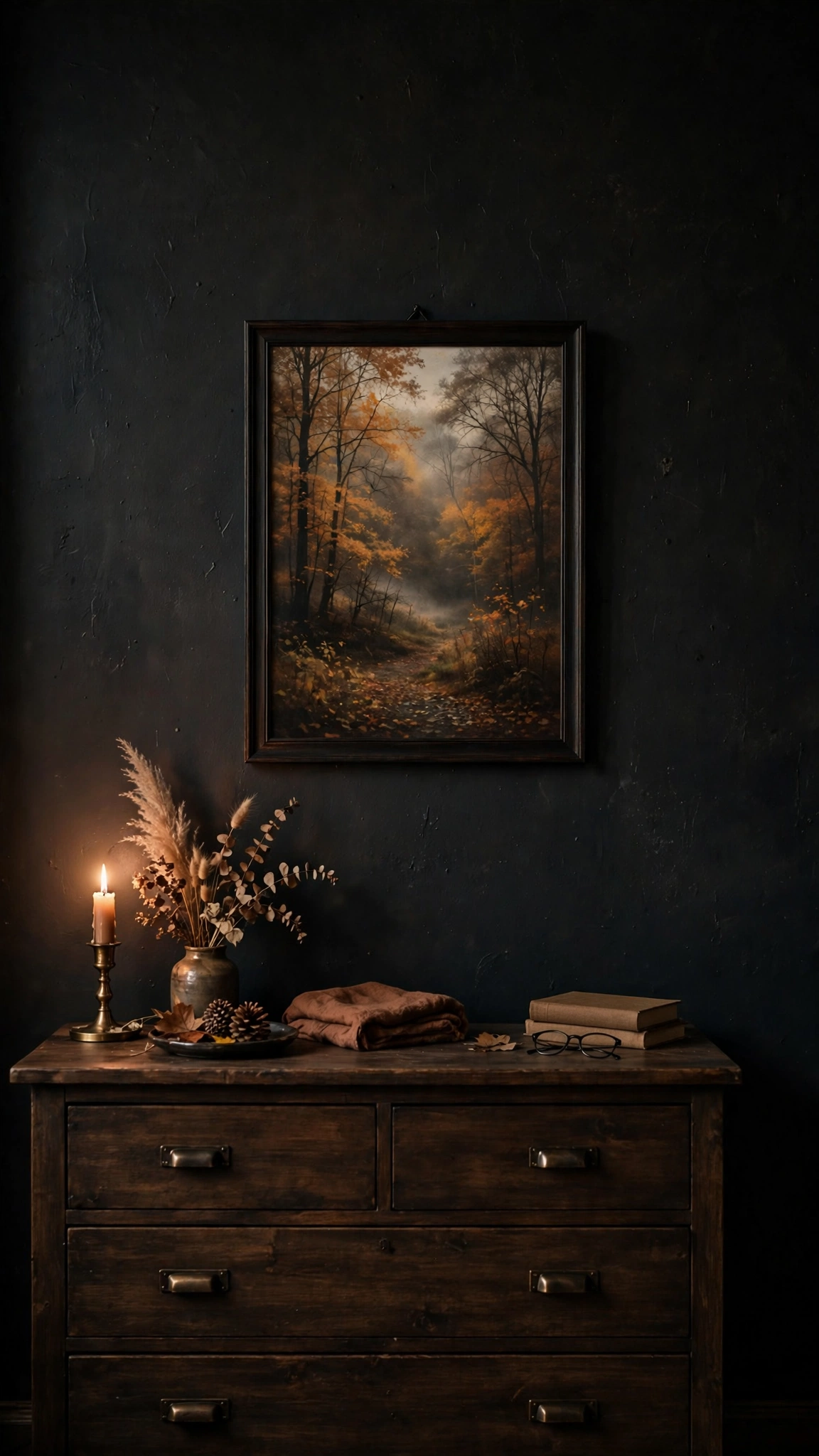
One or two moody autumn landscape or leaf prints, in dark or brass frames, can carry the season for the whole room, which lets bedding and curtains stay plain and calm. The key is choosing muted scenes, with soft light and deep tones, rather than bright, postcard-style autumn colors that fight with the dark walls. Hung at eye level above a dresser or beside the bed, with the rest of the wall kept simple, the art reads as a grown-up seasonal choice rather than a themed decoration.
17. A Natural Harvest Basket With Pinecones, Dried Orange, and Cinnamon
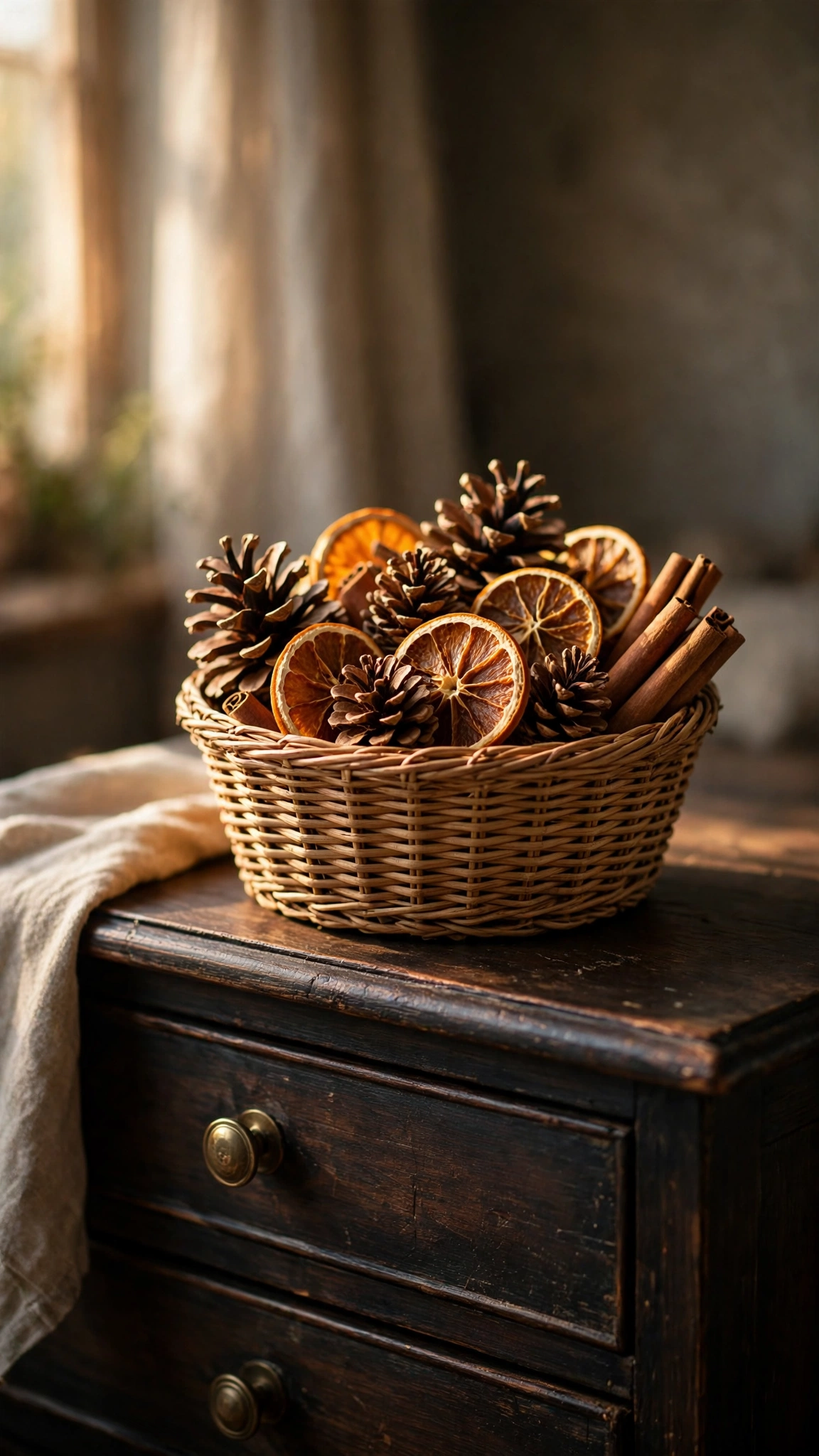
A woven basket or bowl holding pinecones, dried orange slices, and cinnamon sticks is a small, contained harvest display that also brings a gentle scent into the room. Keeping it to one basket is the whole point: it feels like autumn gathered from nature, not like a shop display, and it leaves the rest of the dresser clear. Dried items that shed heavily are worth skipping, and the display sits best away from bedding, where it will not be knocked over or slept against.
- Styling tip: Refresh the dried orange or cinnamon when the scent fades, rather than adding more items to the basket.
- Budget-friendly option: Pinecones and cinnamon sticks alone, gathered in a bowl you already own, give the same effect for very little cost.
18. One Plaid Throw as the Only Strong Fall Pattern
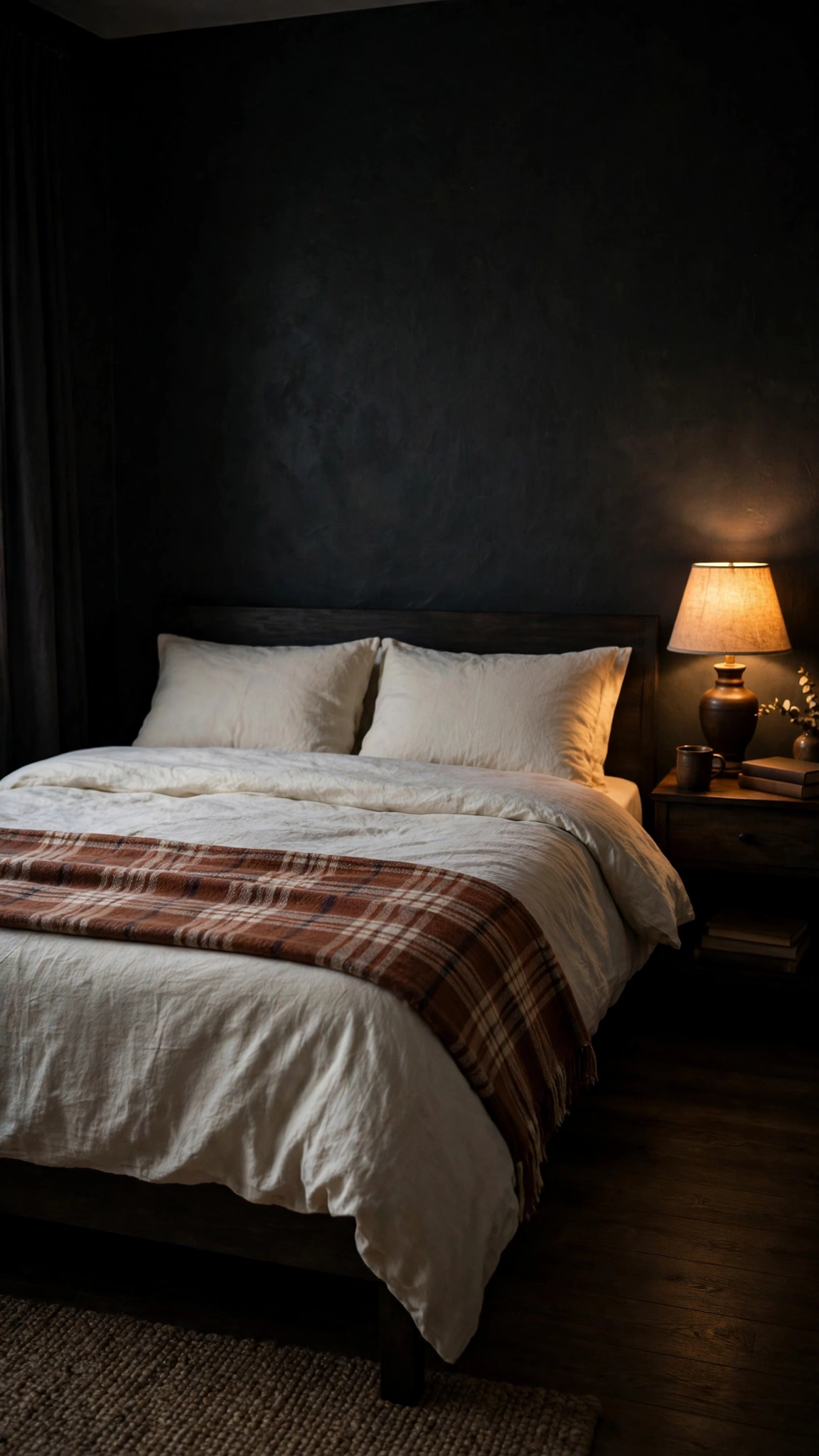
Using one plaid throw as the only strong pattern in the room is an exercise in restraint that pays off, because the pattern then reads clearly as fall instead of competing with patterned bedding, curtains, and art. A muted plaid in rust, brown, and cream works best, since bright plaid can dominate a dark room fast. Placed at the foot of the bed or over a chair, with at most one plaid color repeated in a single cushion, it gives the room its seasonal pattern in one confident move.
- Color combination: Muted rust, brown, and cream plaid, with plain bedding and plain curtains around it.
- What to avoid: Adding a second plaid, a checked cushion set, and a patterned rug, which turns one clear pattern into visual noise.
19. A Dried Leaf Garland Over the Headboard, Kept Simple and Flat
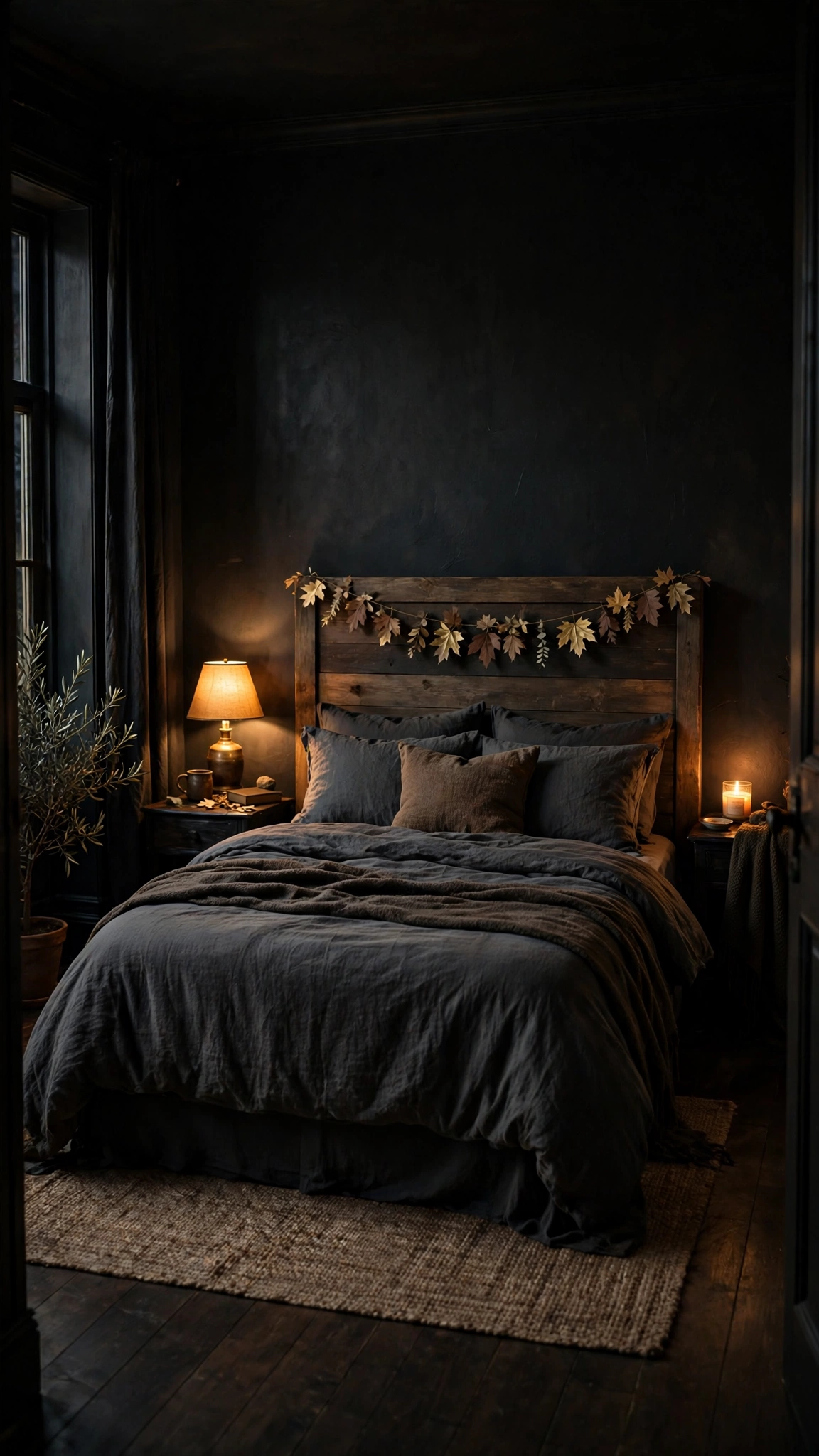
A simple dried leaf garland hung flat over the headboard, or along a shelf, frames the bed with autumn in a quiet way, without lights, signs, or props added to it. The flat, simple hang is what keeps it looking like nature rather than party decoration, and it means the garland does not compete with the bed itself. Muted gold and brown leaves suit a dark wall best, and secure, flat hanging matters, since a loose garland sags, catches on bedding, and looks untidy within days.
Cozy Corners, Storage, and Subtle Fall Scent
20. A Fall Reading Corner With an Armchair, Wool Throw, and Warm Lamp

A small reading corner gives a fall bedroom a clear evening purpose beyond the bed, and it works even in a modest room if the chair is compact and the corner is kept clear. A comfortable armchair, a wool throw, a warm lamp at reading height, and a small side table for a book and a drink are all it needs. The corner feels finished when it is used, not just arranged, so the throw should be one you actually reach for, and the lamp should be one you can switch on from the chair.
- Styling tip: Place the lamp just behind or beside the chair at reading height, so the light falls on the page without glare.
- Budget-friendly option: A chair you already own, recovered with a wool throw and a good cushion, often works better than a new chair bought for the look.
21. A Window Nook With a Plaid Cushion and Warm Evening Light
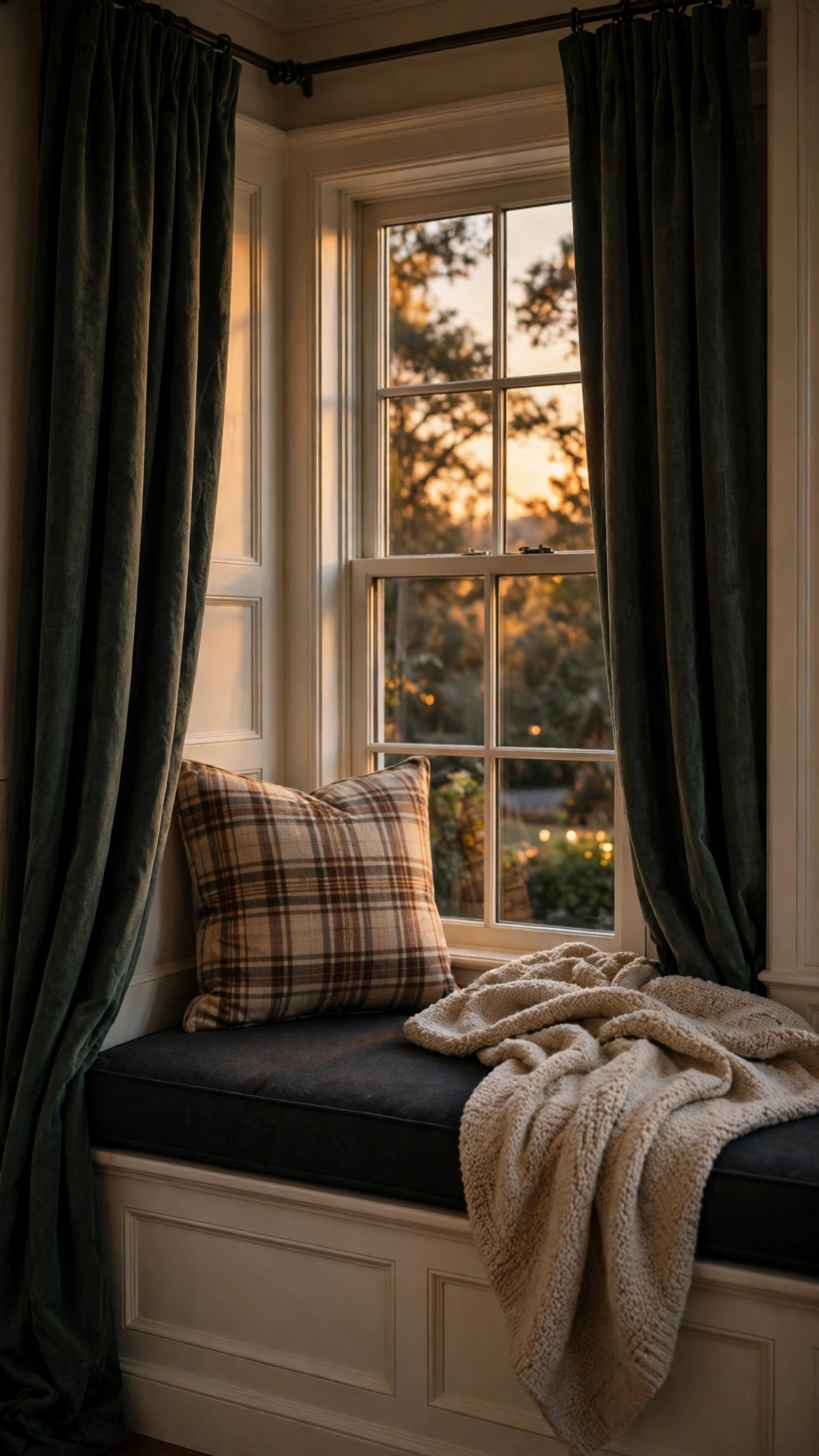
A window nook turns the window into a fall spot for both day and evening, rather than just a feature you look at from the bed. A deep sill, a bench, or a bay area dressed with a firm dark cushion, one plaid cushion, and a throw, framed by heavy curtains, feels like a small seasonal scene in itself. The firm cushion matters, since a soft pile of cushions looks inviting but is uncomfortable to sit on for more than a few minutes, and sheer curtains underneath keep daytime privacy while the heavy layer frames the nook at night.
- Styling tip: Measure the seat before buying cushions, and layer one plaid cushion only, so the nook stays calm.
- What to avoid: Letting curtain cords hang loose near the seat, where they tangle and look untidy.
FAQS
How do I make a dark bedroom feel cozy and not gloomy in fall?
Use warm, layered light instead of one bright overhead bulb, and balance dark walls with a light bedding or rug color. Add texture through wool, knit, and velvet, and place a mirror where it catches daylight. If the room still feels heavy, keep one wall or one large surface lighter.
What colors work best for a dark moody fall bedroom?
Start with one deep color, such as charcoal, espresso, muted olive, or forest green, and pair it with cream or warm wood. Add rust or ochre in small amounts, through a throw or one cushion, for the autumn signal. Keep strong color to one or two places, so the room feels rich rather than loud.
How do I transition my bedroom from summer to fall?
Swap bedding first, then throws and cushions, then curtains and lighting, and finish with small natural touches. Store summer bedding and light throws in closed baskets or under-bed boxes as you go, so the swap stays tidy. Leave art and garlands until last, once the room’s new colors are already in place.
What lighting works best for dark autumn evenings?
Layer two or three warm, low light sources instead of relying on one bright ceiling light. Use bedside lamps for reading, a wall sconce or floor lamp for a soft evening glow, and dimmable warm bulbs throughout. Battery candles or enclosed lanterns add candlelight safely near bedding and dried botanicals.
How can I stay warm in bed in fall without overheating?
Layer a breathable sheet and a light blanket under a heavier duvet or throw, so one layer can be pushed aside during the night. Keep the room cool, and choose cotton or brushed cotton underneath rather than stacking heavy layers. A throw at the foot of the bed adds warmth on cold nights without committing to it all night.
How can I decorate a bedroom for fall in a rental without painting?
Use dark bedding as the largest color block, then heavy curtains for a second large block of dark color. Add removable wall panels or framed art, dried botanicals, and warm lamps, all of which come down without damage. Keep the ceiling and one wall light, so the room feels moody rather than small.
How do I decorate for fall without making it look like Halloween?
Signal autumn through color, texture, and nature instead of themed props. Use rust and ochre, wool and velvet, dried grasses, warm wood, and muted leaf art, and skip pumpkins, spooky props, and themed signage. The room will read as fall all season, rather than as a decoration for one night.
Conclusion
A dark moody fall bedroom works when color, bedding, and light are kept in balance, and that balance is easier to reach than it first looks. Owners can start with a wall, renters can start with bedding and curtains, small rooms can start with light, and a tight budget can start with sheets and a warm bulb, so almost any bedroom has a sensible first step.
Try one or two ideas this weekend, live with them for a few evenings, and then decide what the room still needs. A throw swapped here, a lamp dimmed there, and a basket tidied away are often all it takes for a bedroom to settle into its autumn mood, and the same room, with only throws and cushions changed, will be ready for winter when that season arrives.