22 College Room Ideas to Make Your Dorm Feel Like Your Own Space
A college dorm room can feel bare, cold, and borrowed at first, with plain walls, a narrow Twin XL bed, a small desk, and a closet that never seems quite big enough. These college room ideas are written for that real dorm life, with damage-free decorating, shared-room fairness, warm light, and smart storage, so the room feels personal, cozy, and livable for a whole semester.
You do not need to do all 22 ideas, and you should not try to buy everything on move-in day. Start with the dorm rules and the bed, then add walls, light, and storage in that order, and the room will already feel more like yours. Every idea below works inside a dorm, not after you leave one, and each one can come down cleanly at the end of term.
Know the Room and Its Rules
1. Read the Dorm Rules Before You Decorate
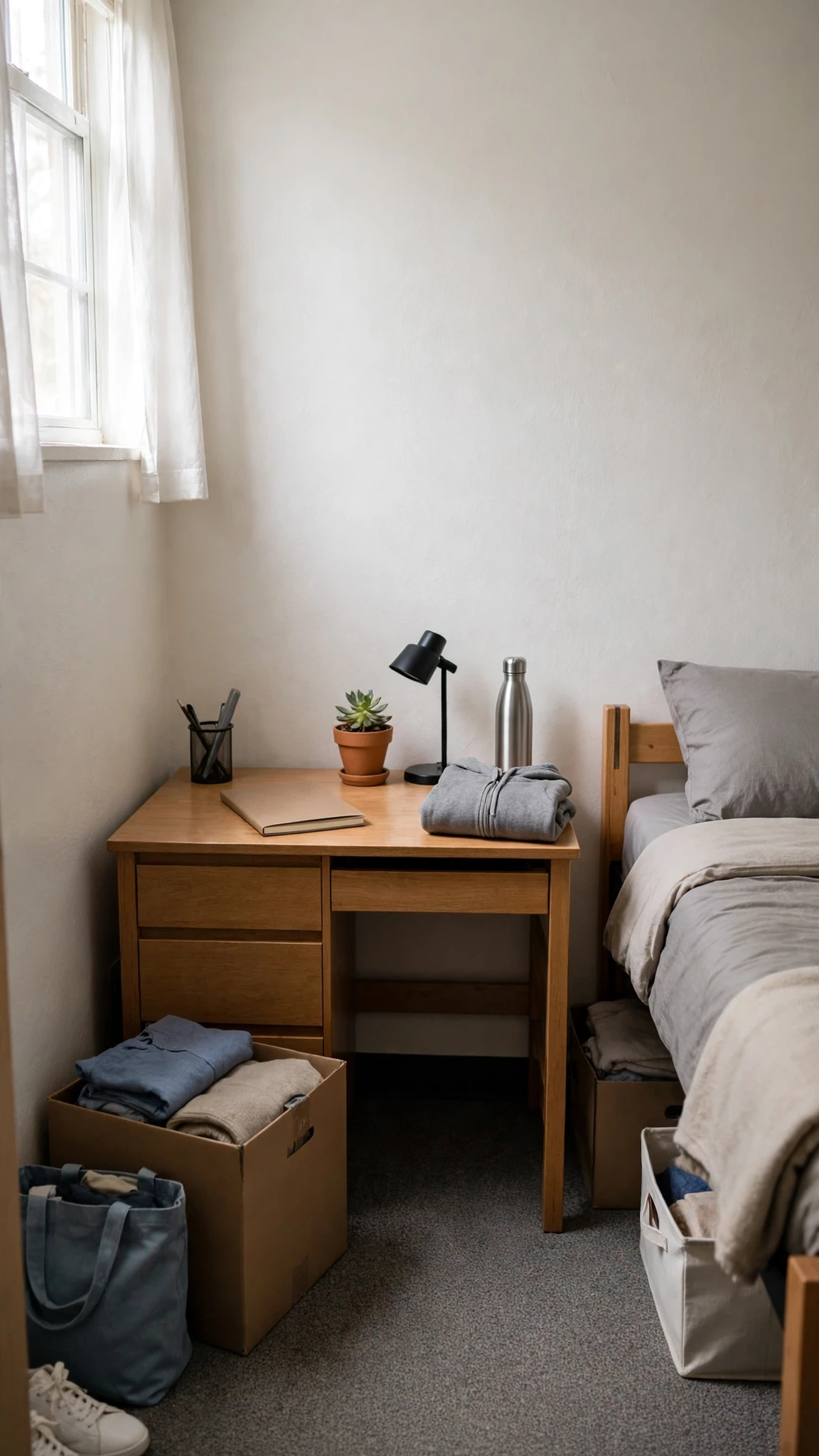
Before you buy a single frame or light, read the residence-hall rules on adhesives, hanging methods, lofting, lights, and appliances, because what is allowed in one hall can be banned in another. A quick check saves money and trouble later, and it turns the rest of your decorating into choices you know are safe rather than guesses you hope will pass inspection. Photograph the room on move-in day, ask your resident advisor about anything unclear, and keep a short note of what your hall allows for adhesives, bed risers, and lights.
- Styling tip: Photograph walls, windows, and furniture on move-in day, so you have a clear record of how the room started.
- What to avoid: Buying a full set of decor before checking the rules, then finding half of it cannot be used in your hall.
2. Choose One Calm Palette for a Tiny Shared Room
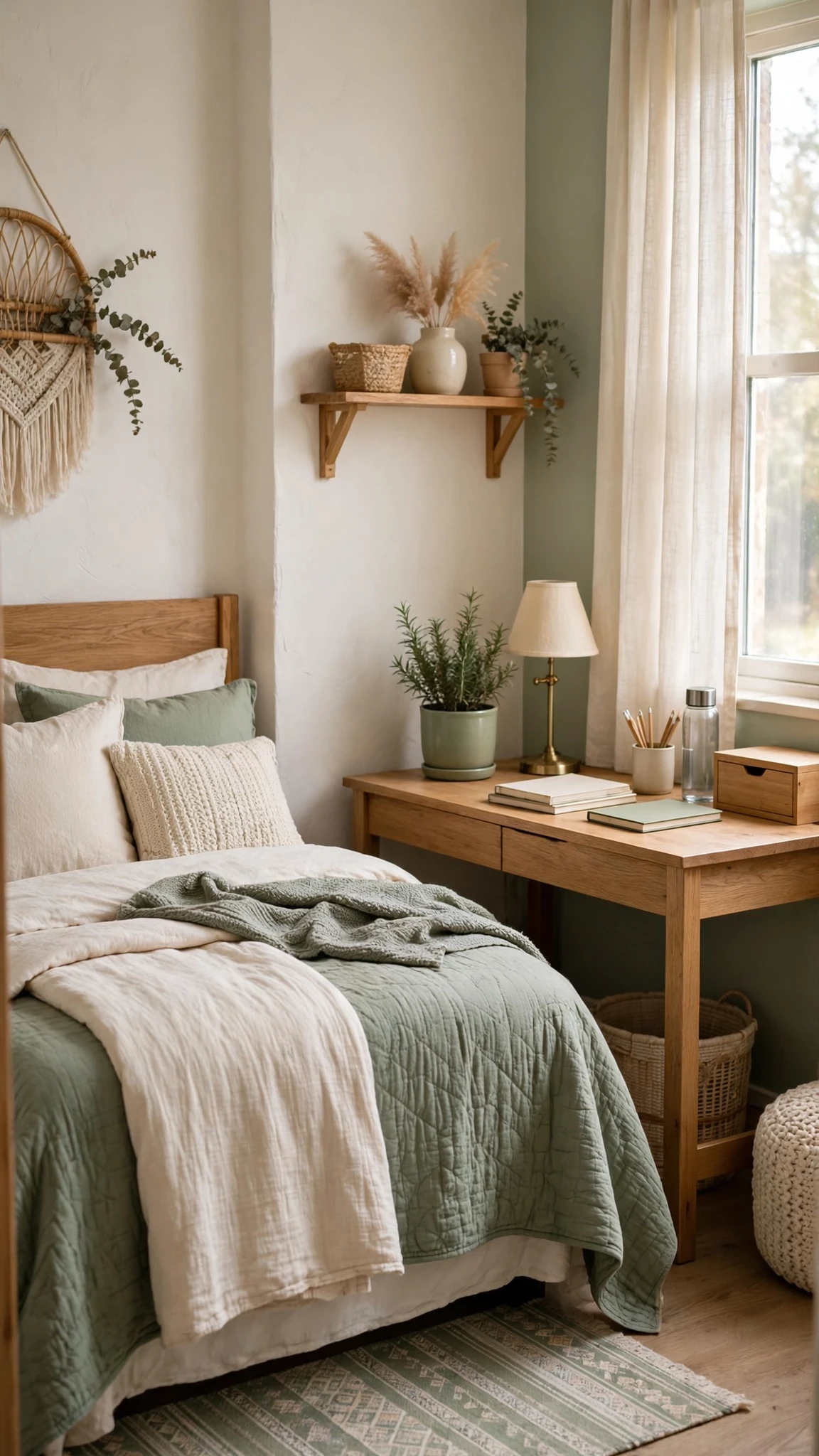
Pick one calm palette, such as warm white, sage, and cream, and carry it through bedding, the rug, and storage, so a tiny shared room reads as one calm room rather than two crowded halves. A shared palette does the quiet work of tying mixed belongings together, and it makes a small room feel settled even before much has been bought. Choose the palette from something you already love, such as a throw or a print, test it against the dorm wall colour and daylight, and keep bright colours to one accent so the room stays calm.
- Color combination: Warm white bedding and walls, sage throws and cushions, and cream curtains and storage, with one warm accent at most.
- Styling tip: Keep storage bins and the rug inside the same palette, so practical pieces look planned instead of improvised.
3. Map Your Side of the Room Before Move-In Day
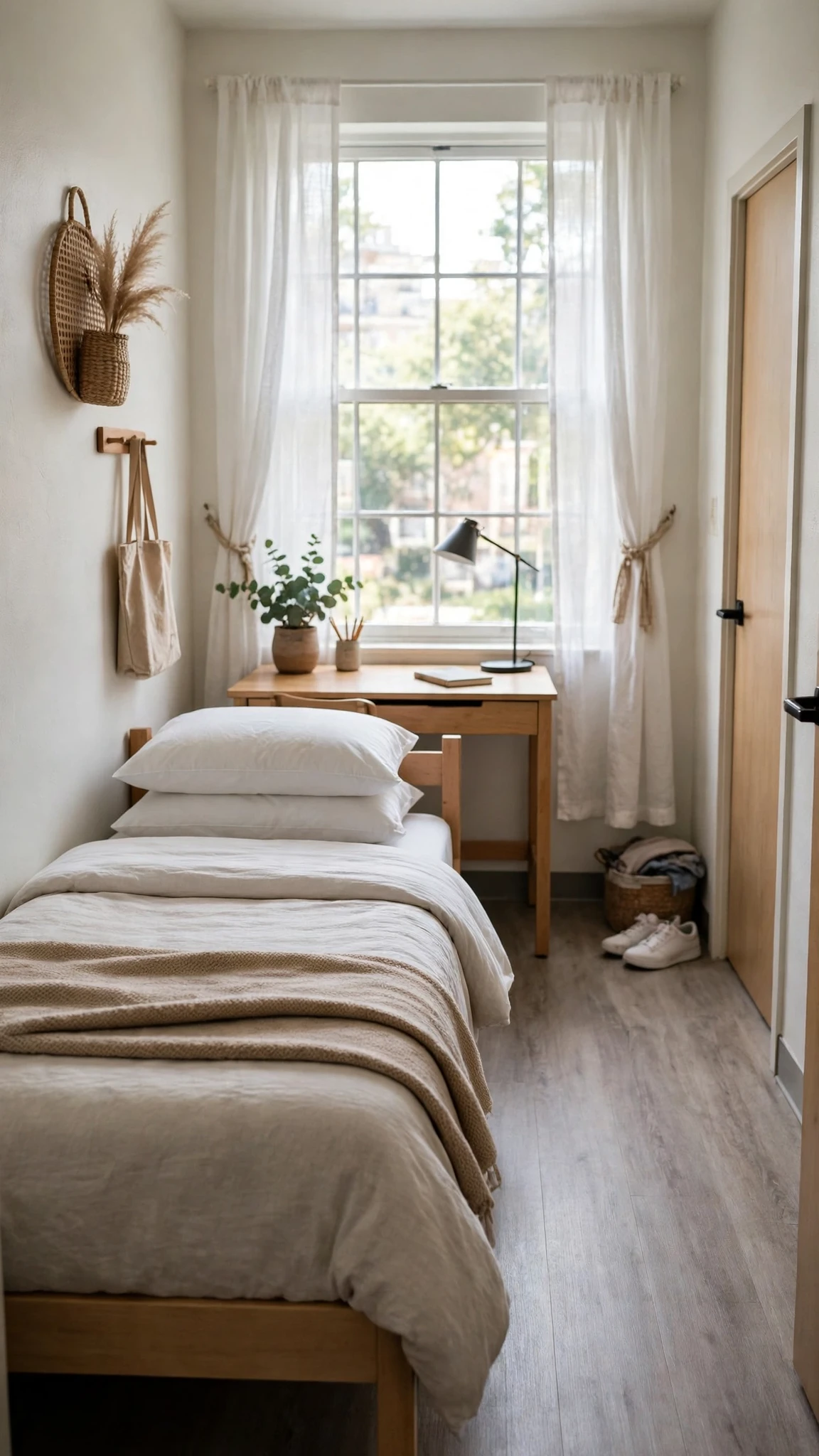
Sketch a simple layout for your side of the room, marking the bed, desk, closet, and walking gap, so move-in day becomes a setup day rather than a long reshuffle. Measuring first matters in a dorm because a bed, desk, and closet that look fine in photos can crowd each other badly in a small room, and a clear path to the door keeps mornings calm. Plan the bed wall first, then the desk, then storage, and leave space to open drawers and the closet fully.
- Styling tip: Mark the bed and desk outlines on the floor with tape on move-in day, and check the walking gap before unpacking boxes.
- What to avoid: Pushing furniture against every wall on arrival, with no path left to the door or the shared bathroom route.
4. Cover Cinder Block Walls Without Damage

Soften cold cinder block or plain painted dorm walls with fabric, a curtain wall, or removable wallpaper where your hall allows it, without paint, nails, or drilling. A tension rod with soft cream curtains can turn a hard wall into a warm backdrop in minutes, while removable wallpaper on one wall only gives pattern without taking over a tiny room. Use adhesive hooks for fabric panels where they are allowed, keep the fabric clear of heaters, and never cover sprinklers, smoke detectors, or fire exits with any hanging.
The Bed as Your Home Base
5. Build a Cozy Dorm Bed With Layers You Love

Layer a mattress topper, fitted and flat sheets, a duvet, and one throw in your palette, so the dorm bed becomes the coziest and most personal spot in the room. The bed fills the view from the doorway, so good layers change the whole room at once, and washable fabrics matter because dorm bedding gets used every day and washed often. Fold the throw across the foot of the bed by day, keep cushions to two textured pieces, and store them on a chair at night so mornings start tidy.
- Color combination: Cream sheets, a sage or oatmeal duvet, and one warm throw, with cushions in the same family.
- Styling tip: A mattress topper is worth buying early, because it improves sleep on a firm dorm mattress from the first night.
6. Loft or Raise the Bed to Free the Floor
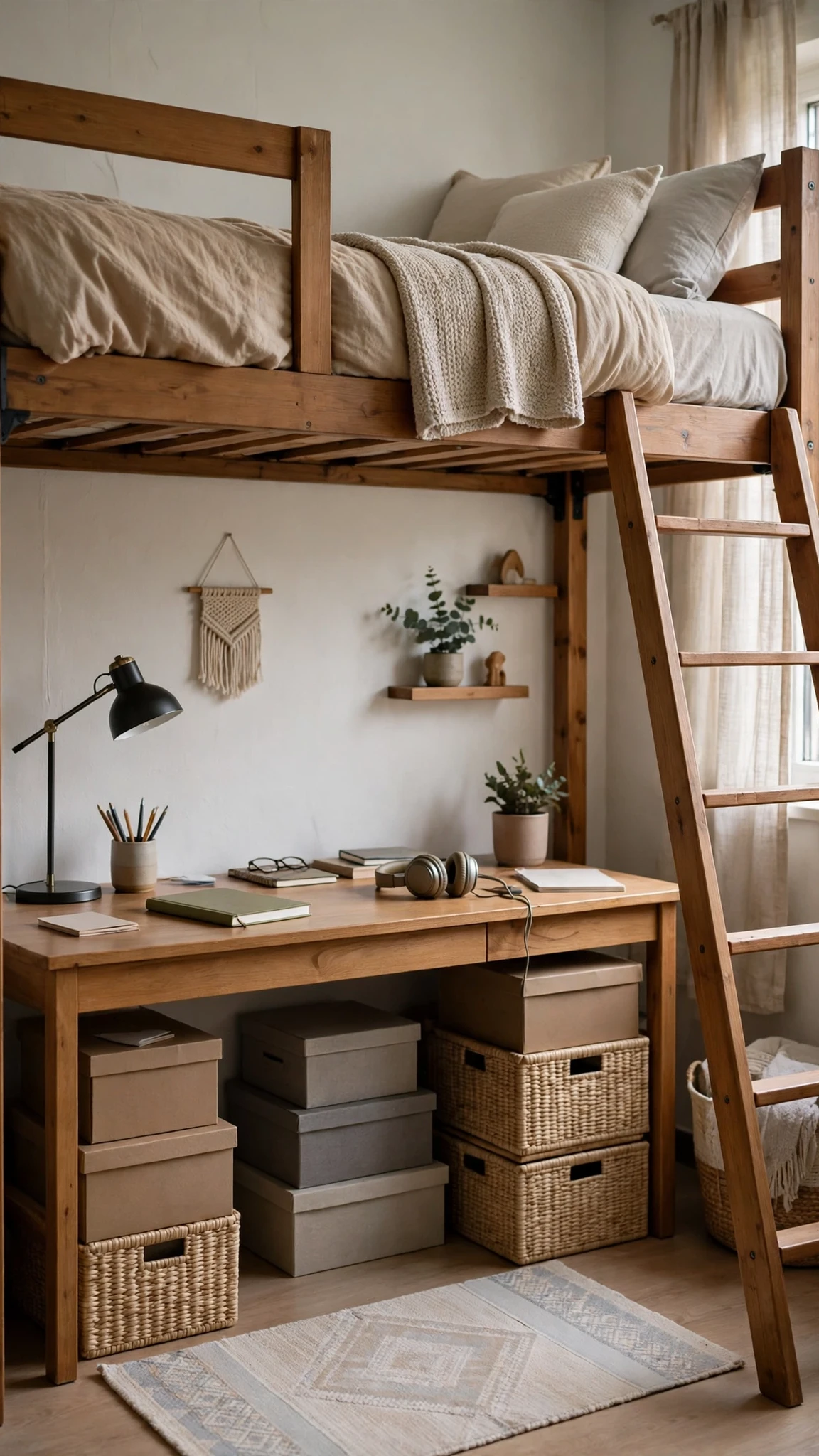
Where housing rules and the bed design allow it, loft the bed or raise it on approved risers so the floor underneath holds a desk, storage, or a small lounge spot. A lofted bed changes a tiny dorm more than almost any other single move, because it gives the room a second layer instead of one crowded floor. Check the housing office and the bed fittings first, use only approved lofting kits or risers, keep the ladder or steps safe and clear, and give the space below one clear purpose rather than letting it become a pile.
- Styling tip: Put the desk under a lofted bed only if you can sit comfortably and reach a lamp without stretching.
- What to avoid: Lofting or raising a bed with unapproved parts, or blocking the ladder with boxes and bags.
7. Make the Bed a Daytime Lounge Too

Arrange the dorm bed so it works as a daytime lounge as well as a bed, with a firm backrest cushion, a throw, and a small tray, without letting it turn into a messy all-day bed. A backrest makes reading and chatting comfortable, while a tray gives a book and a drink a proper place instead of the pillow. Make the bed properly each morning, keep daytime items off the pillows, and put the tray away at night so the bed still feels like a place for sleep.
8. Add a Bedside Caddy Instead of a Nightstand

Use a hanging bedside caddy or a clip-on shelf for a phone, book, water, and charger where there is no room for a nightstand beside a dorm bed. The floor stays clear, which matters most in a room barely wider than the bed, and nightly essentials still have a home within reach. Choose a caddy that fits the bed frame, keep only nightly items in it, and add a small clip-on light for reading so a roommate can sleep undisturbed.
Walls That Feel Like Yours
9. Build a Photo Wall With Adhesive Strips
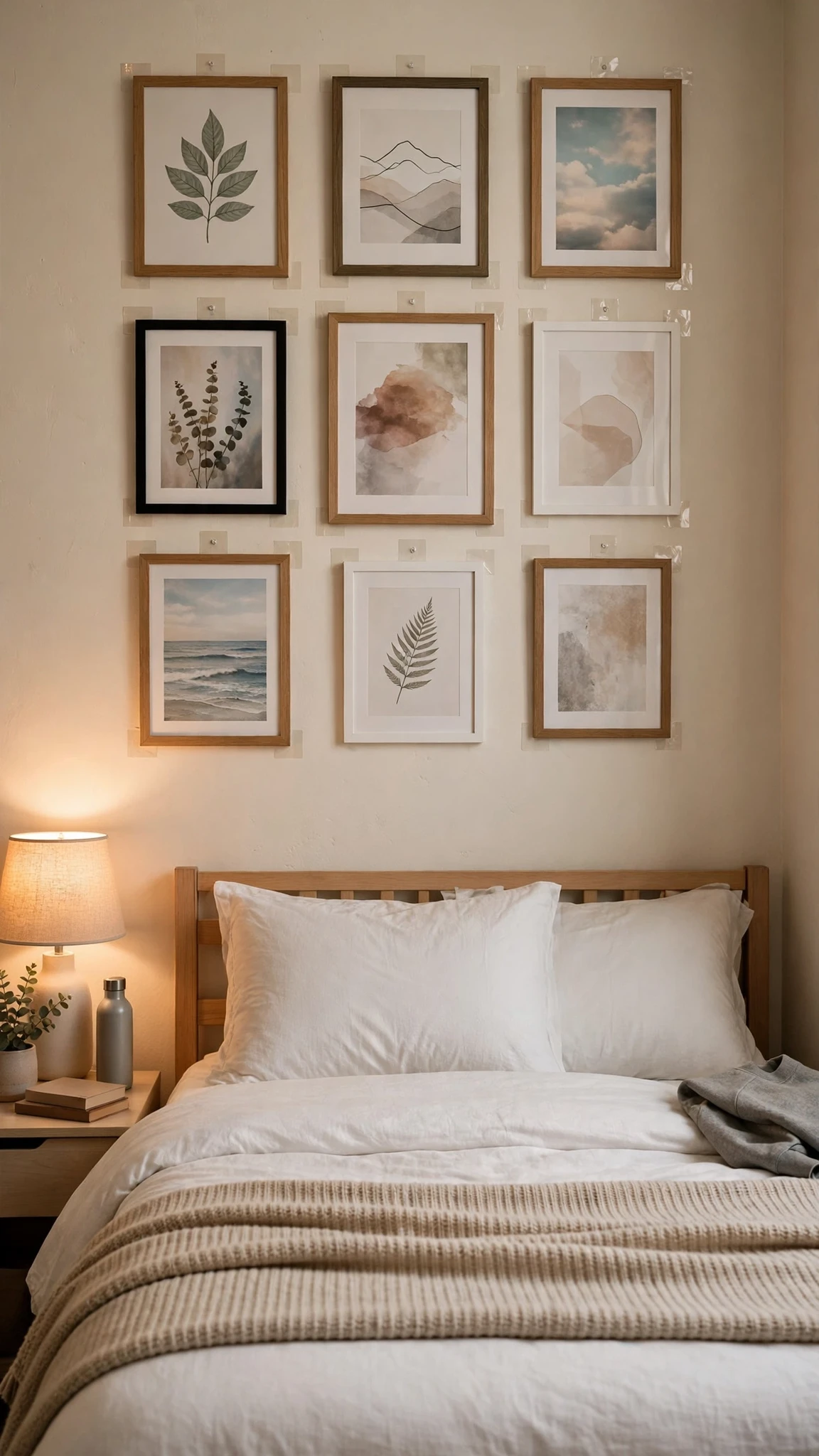
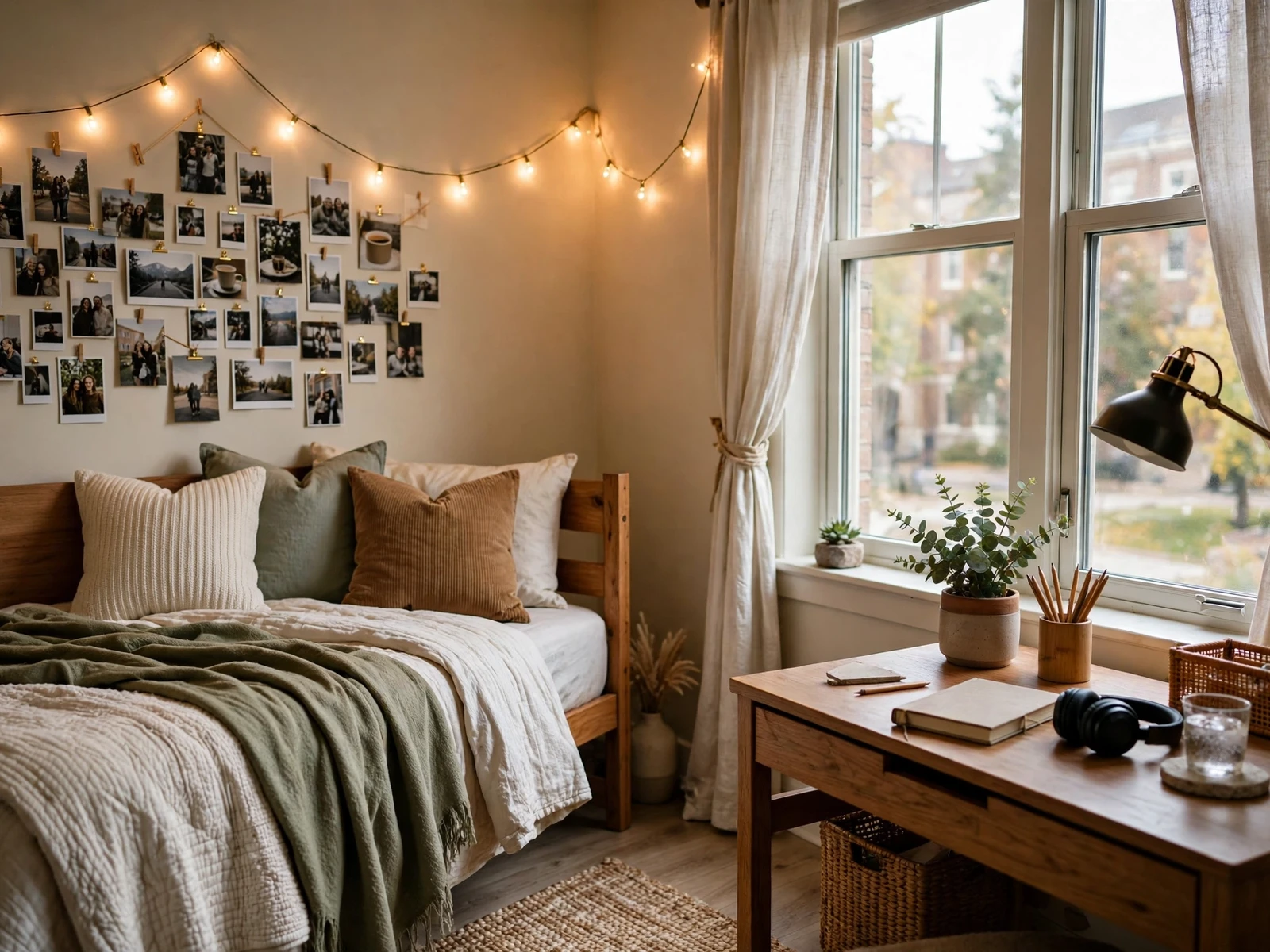
Create a photo wall of family, friends, and favourite places using adhesive strips rated for each frame, so the wall feels personal and comes down cleanly at the end of term. A photo wall works best as a planned group rather than a random scatter, and a little planning makes it look calm instead of crowded. Lay the frames on the floor first, keep frames in one or two finishes, leave breathing space between photos, and check the strip weight rating for every frame before hanging.
- Styling tip: Hang the largest piece at eye level first, then build smaller frames around it with even gaps.
- What to avoid: Hanging a heavy frame on a strip rated for a light one, or covering a whole wall edge to edge.
10. Hang a Tapestry or Curtain Wall for Softness

Hang one tapestry or a soft fabric panel on the bed wall to add colour, warmth, and a softer feel, using adhesive hooks or a tension rod where your hall allows them. One large piece of fabric changes a plain dorm wall faster than many small decorations, and it also softens the hard look of a shared room. Choose a tapestry in the room palette, keep it to one wall, and keep it clear of heaters, sprinklers, and smoke detectors at all times.
- Styling tip: Hang the tapestry at bed height so it reads as a headboard wall, not as a curtain floating high on the wall.
- Budget-friendly option: A tension rod and one fabric panel cost far less than a wall of frames and come down in minutes.
11. Create a Rotating Display Ledge for Art and Memories

Use a narrow leaning shelf or a picture ledge for a few rotating pieces, so the display can change through the semester without new holes or strips each time. A ledge suits dorm life well because prints, postcards, and small plants can be swapped for a new season, a trip, or exam time without starting the wall again. Lean the ledge safely where your hall allows it, rotate pieces seasonally, and keep the ledge to a few pieces so it stays calm rather than crowded.
12. Use a Cork or Felt Board for Notes, Tickets, and Plans

Put a cork or felt board by the desk for tickets, photos, deadlines, and notes, so personal memories and practical plans share one tidy, changeable spot. A board keeps small papers off the desk and the bed, and it gives the room a personal corner that still works hard every day. Hang it with adhesive fixings where allowed, group tickets and photos on one side and deadlines on the other, and clear it at the end of each month so it never turns into a cluttered wall.
Warmth, Light, and Soft Surfaces
13. Swap Harsh Overhead Light for Warm Layers

Replace harsh ceiling light in the evening with a warm desk lamp and a small floor or bedside lamp, so the dorm feels cozy after classes instead of bright and institutional. Warm layered light hides a plain ceiling far better than decoration can, and it lets you control the room by corner, with brighter light for study and softer light for winding down. Keep all bulbs warm white, put the brightest light at the desk, keep the other light low for evenings, and check your hall’s rules before using string or adhesive lights.
- Styling tip: Switch the ceiling light off in the evening and let the low lights set the mood, even on ordinary weeknights.
- What to avoid: Mixing cool white bulbs with warm ones, which makes a small room feel uneven and unsettled.
14. Soften the Window With Sheers and a Tension Rod
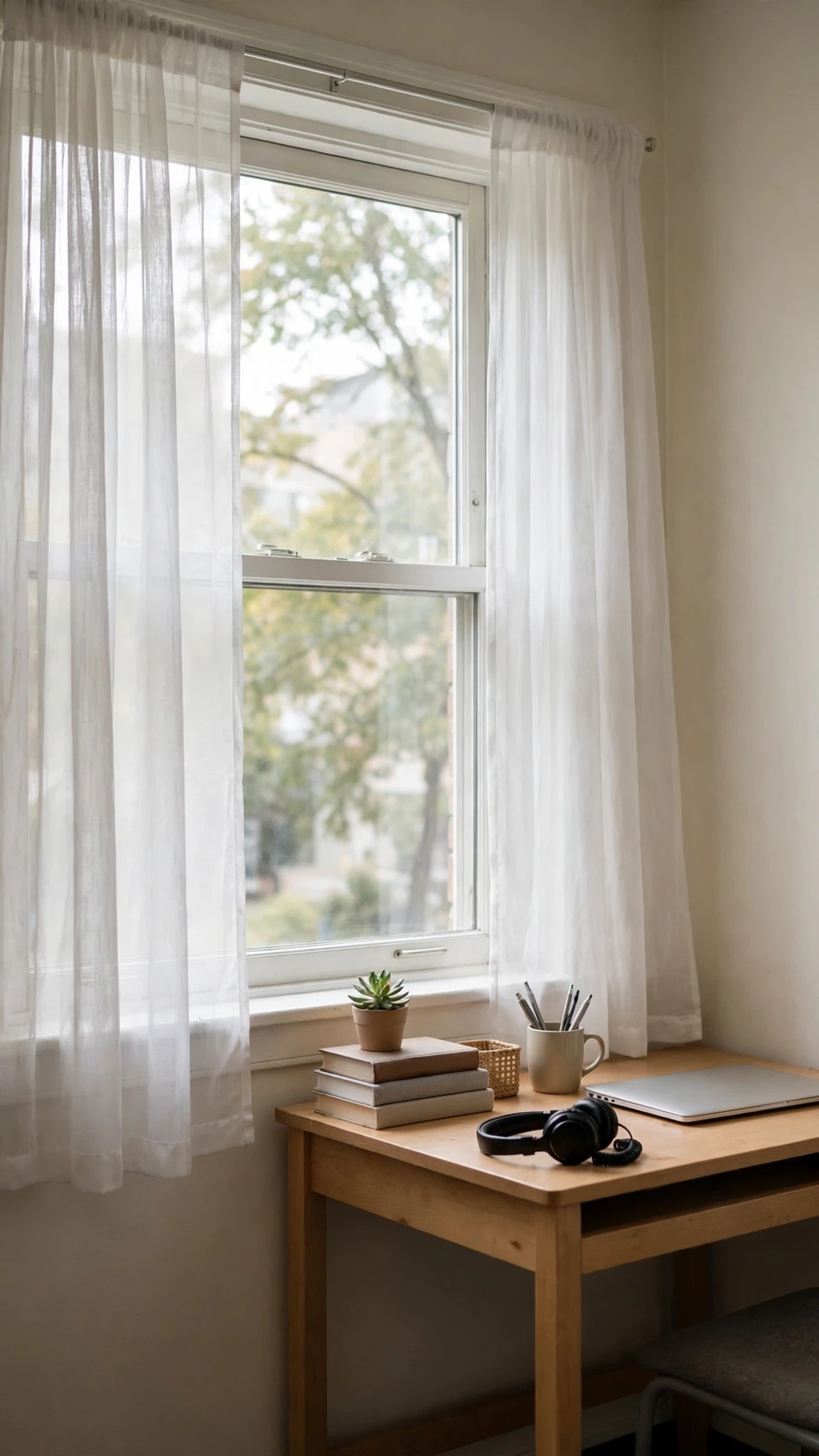
Hang sheer curtains on a tension rod to soften a bare dorm window, add privacy, and filter daylight, without drilling or changing the existing blinds. Sheers make a small room feel softer in the daytime and give a plain window a finished look, while the blinds underneath still do the work of blocking light at night. Measure the window recess first, choose light fabric in the room palette, and keep the existing blinds in place underneath where your hall requires it.
15. Lay a Rug That Warms Cold Dorm Floors
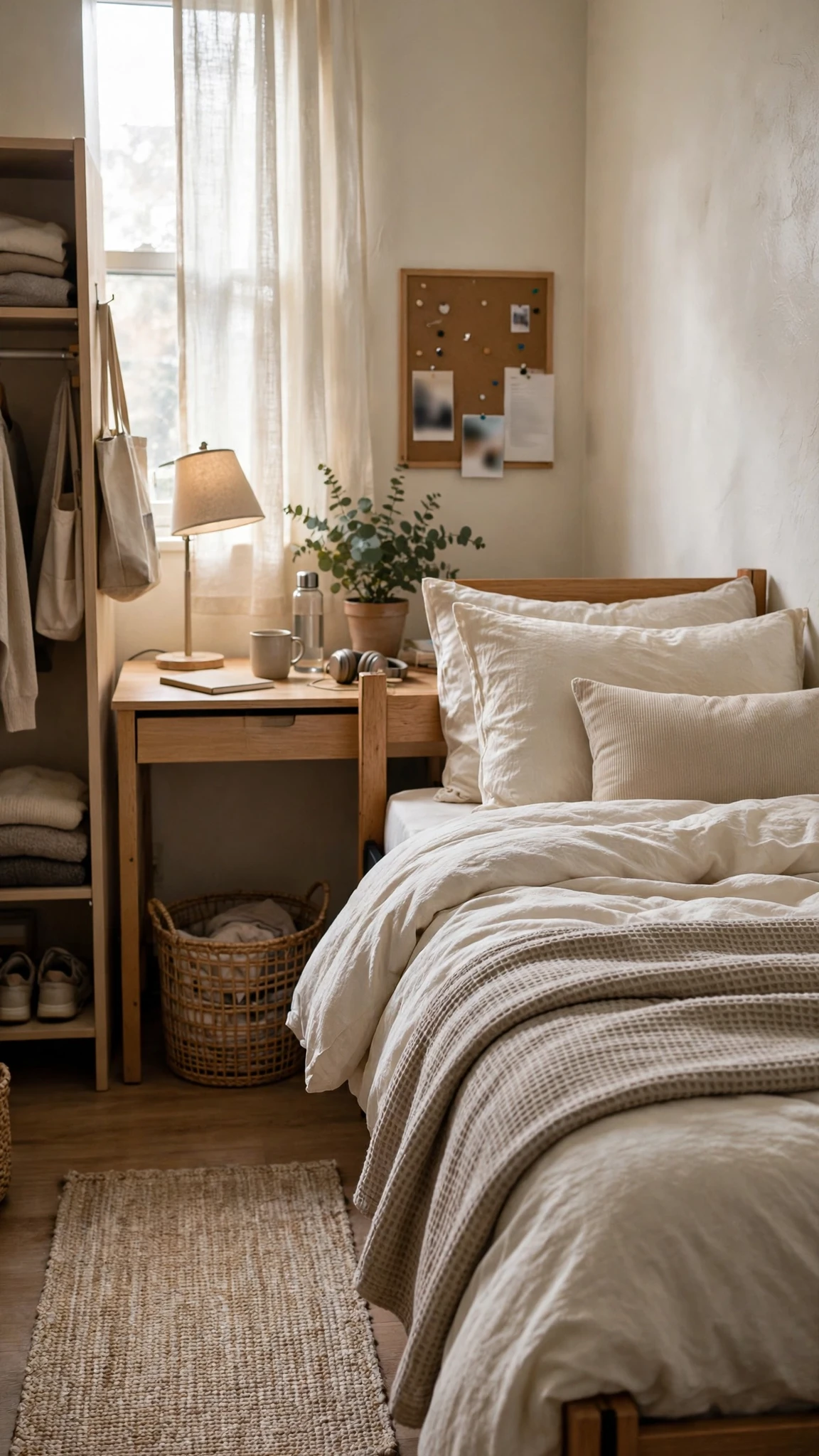
Lay a small washable rug beside the bed so cold tile or linoleum floors feel warmer, the bed area feels defined, and bare feet meet something soft in the morning. A rug also marks where the sleeping area begins in a shared room, which helps a tiny dorm feel ordered rather than open-plan. Choose a rug large enough to step onto from the bed, in a flat weave that is easy to clean, and in a colour from the room palette so it ties the bed, curtains, and wall pieces together.
- Styling tip: Place the rug where your feet land first thing, not centred under the whole bed where most of it stays hidden.
- Budget-friendly option: A small flat-weave rug costs far less than a large one and is much easier to wash in a dorm.
16. Add One Plant Corner That Survives College Life

Keep one or two low-care plants on the sill or a shelf, so the dorm gains life and colour without a plant collection that needs daily care during busy weeks. Greenery softens a plain dorm instantly, but a struggling plant quickly becomes one more thing to worry about, so low-care plants suited to the room light are the right choice. Keep pots in one or two finishes, water on a simple weekly routine, and use faux plants only if real plants keep failing in your room light.
Study, Storage, Sharing, and Settling In
17. Set Up a Desk That Works for Study and Getting Ready

Arrange the dorm desk for both study and getting ready, with a mirror, a small organizer, and a lamp, so one tiny desk serves two daily routines well. A desk that only works for study leaves getting-ready items scattered across the bed, while a desk that only holds beauty items leaves nowhere to write. Keep the surface clear except for study essentials, add a small mirror that can be put away, use one tray for chargers and small items, and keep the chair comfortable for long study sessions.
- Styling tip: Keep a small tray for chargers and cables on the desk, so tidying it takes seconds rather than a full clear-out.
- What to avoid: Letting the desk become a second storage shelf, with no clear space left for writing or a laptop.
18. Use Vertical Storage So the Floor Stays Clear

Use over-door organizers, hanging shelves, and wall hooks to store shoes, bags, and supplies vertically, so a tiny dorm floor stays clear and walkable. Floor clutter is what makes a small dorm feel cramped fastest, and vertical storage uses wall and door space that would otherwise sit empty. Put daily items at hand height, keep rarely used items higher, leave a few pockets empty so doors still close easily, and check adhesive weight ratings before hanging anything heavy.
- Styling tip: Give each bag and pair of shoes one hook or pocket, so nothing has to live on the floor by default.
- Budget-friendly option: An over-door organizer and a set of adhesive hooks cost far less than a new dresser and fit most dorm doors.
19. Share a Dorm Without Losing Your Own Corner

Agree on one calm palette and clear zones with a roommate, so a shared dorm reads as one room while each person still has a personal bedside and wall space. Shared does not have to mean mismatched, and a few shared choices keep the room calm for both people even when tastes differ. Split storage clearly, keep personal decor to your own side, use matching bedding tones to tie the room together, and agree on light and noise routines for evenings early in the term.
- Styling tip: Matching bedding tones do more for a shared room than matching furniture, and they cost far less to agree on.
- What to avoid: Letting each half of the room drift into a separate colour scheme, which makes the dorm feel like two rooms pushed together.
20. Keep a Rolling Cart for Snacks, Supplies, and Self-Care
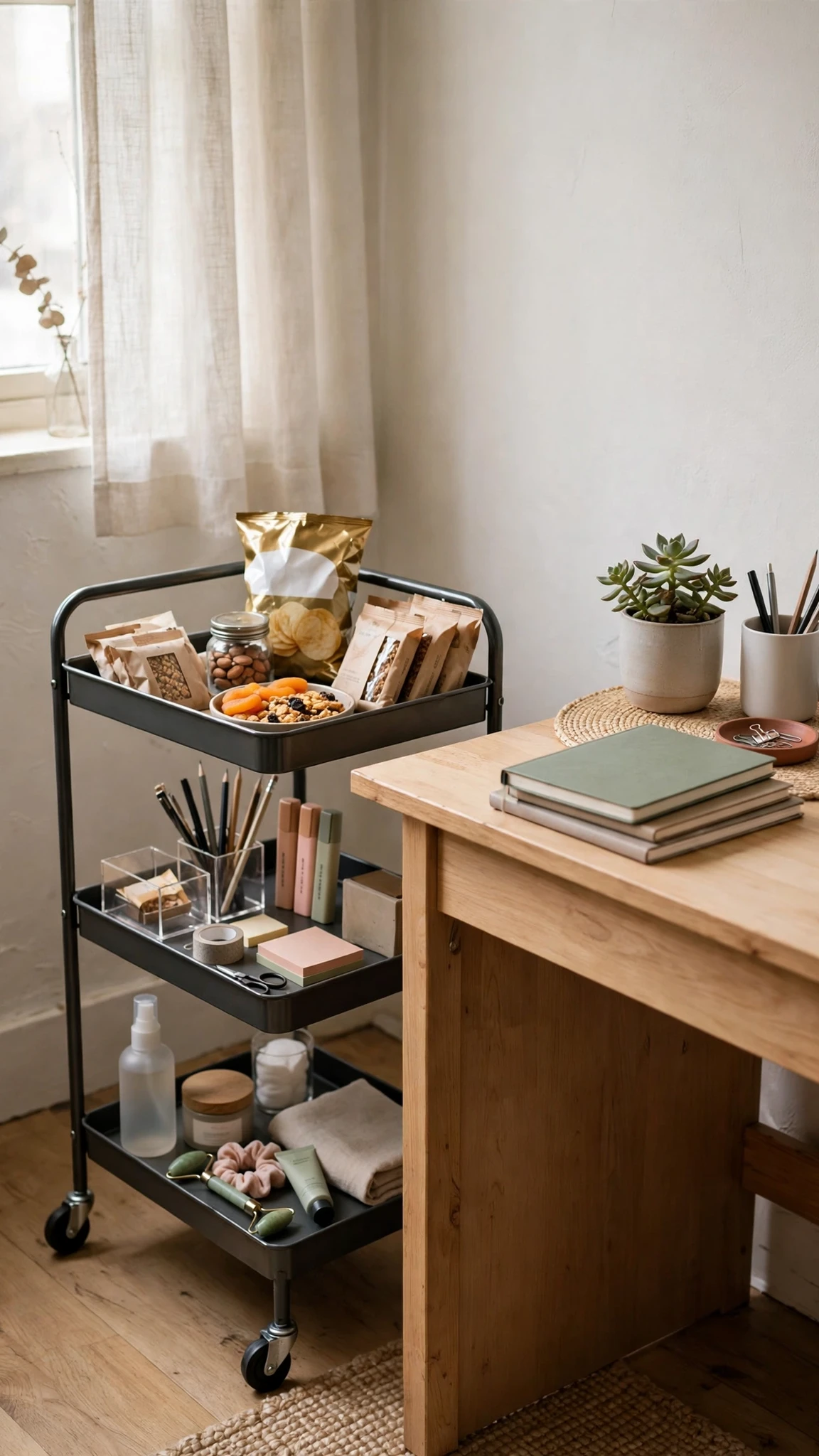
Keep a small rolling cart for snacks, stationery, and self-care items, so everyday things have one movable home and do not spread across the desk and bed. A cart suits dorm life because it can sit beside the desk during study, roll to the bed for a quiet evening, and roll away when guests visit, or the room needs floor space. Choose a cart that fits beside the desk or closet, group items by use on each tier, and keep the top tier for the things you reach for daily.
21. Build Small Semester Rituals Into the Room

Add tiny ritual spots, such as a tea tray by the desk, a made-bed morning routine, and a Sunday reset basket, so the dorm feels like home through habits as well as decor. A room feels personal when it supports the way you actually live in it, not just when it looks good in a photo, and small routines keep that feeling going through busy weeks. Keep a small tray for a favourite drink, make the bed each morning, and spend a few minutes on Sunday resetting laundry, chargers, and surfaces.
- Styling tip: Keep the Sunday reset short and on the same day each week, so it becomes a habit rather than a big clean-up.
22. Refresh the Room for Exams, Then Reset for the Next Term
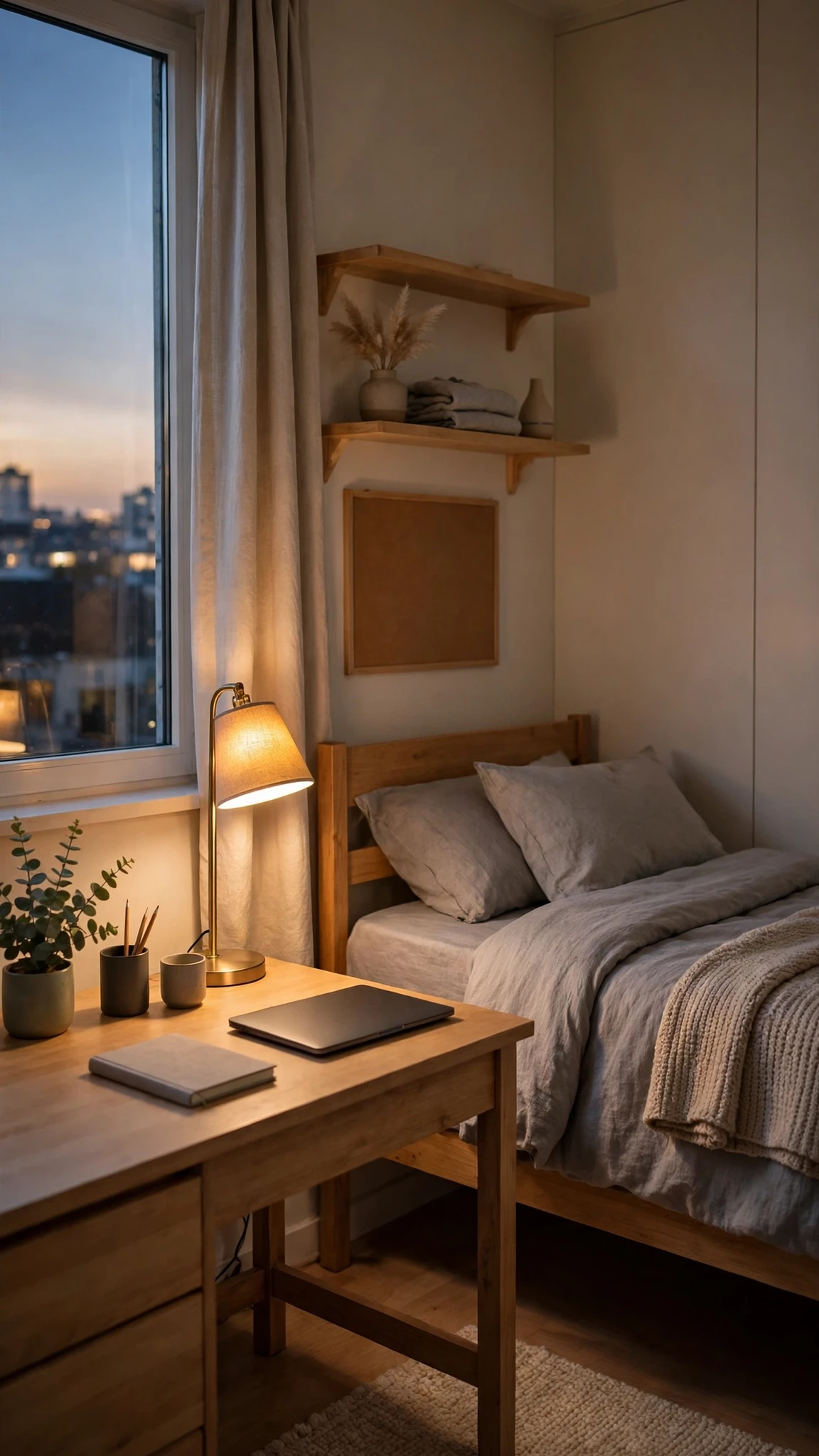
Plan two small room refreshes: a calm exam-season setup with clear surfaces and warm light, and a simple end-of-term reset that returns the room cleanly. Before exams, clear the desk and walls, keep only study essentials visible, and let warm light do the work of making the room feel calm. At term end, remove adhesive items by following their removal steps, photograph the room, and pack personal pieces first, so the dorm hands back tidy and the next term starts fresh.
FAQS
How can I make my dorm room feel like home without damaging the walls?
Use adhesive strips and hooks rated for the weight, removable wallpaper only where your hall allows it, leaning art, and fabric on a tension rod. Check your housing rules first, keep sprinklers and smoke detectors clear, and follow the removal steps so the walls come down cleanly at the end of term.
What should I buy first for a college dorm room?
Buy bedding and a mattress topper first, then a warm desk lamp, storage, and a rug. Measure the bed, desk, and closet before you shop, and leave decoration until last. That order keeps the room comfortable from the first night and stops you spending on decor that does not fit the room.
Can I loft or raise my dorm bed?
Only if your housing rules and bed design allow it. Check with the housing office first, use only approved lofting kits or risers, and keep the ladder and walking space safe. If lofting is not allowed, approved risers can still free up useful under-bed storage without changing the bed frame.
How do I decorate a shared dorm room without annoying my roommate?
Agree on one calm palette and a clear zone for each person before you decorate. Keep personal decor on your own side, use matching bedding tones to tie the room together, and agree on evening light and noise routines early. A short, friendly chat at the start of term prevents most shared-room friction later.
How do I make a small dorm room look bigger?
Use a mirror opposite the window where your hall allows it, keep colours light, and store things vertically so the floor stays clear. A small rug can define the bed area without covering the whole floor, and leaving plain breathing space on the walls stops a tiny room from feeling crowded.
What lighting works best in a dorm room?
Layer warm light instead of relying on the ceiling light. A warm desk lamp for study, plus a small bedside or floor lamp for evenings, makes a dorm feel cozy after classes. Keep bulbs warm white, switch the ceiling light off in the evening, and check your hall’s rules before using string or adhesive lights.
How do I keep a dorm room tidy all semester?
Give laundry, chargers, books, and snacks a named home, such as a hamper, a tray, an under-bed box, and a rolling cart. Use vertical storage for shoes and bags, and spend a few minutes each evening resetting surfaces. When everything has a place, a dorm stays tidy without a big weekly clean.
Final Thoughts
A dorm feels like home when rules, palette, bedding, walls, light, and storage work together, and when the room still respects a roommate and can be reset cleanly at the end of term. Start with what your hall allows, choose one calm palette, make the bed properly, and let walls and light follow, rather than buying decoration first and hoping it fits. In a shared room, that order matters even more, because one calm plan keeps both sides of the room feeling like one home.
Pick your starting point by your room type and budget: a shared room starts with a palette chat and clear zones, a tiny single starts with the bed and vertical storage, and a tight budget starts with bedding, a lamp, and adhesive strips. Then take one practical next step today: check your housing rules and make the bed properly first, and let the rest of the room grow from there, one reversible idea at a time.